ORBIS city feature
Athens: Make a New Argument With Antiquity
By ORBIS Editorial · Reviewed 1 August 2026
Athens does not suffer from a shortage of symbols. Its contemporary challenge is more demanding: to inherit an eye, column, coin or Cycladic line without allowing recognition to replace design.
The problem is not how to reference the past. It is how to prevent recognition from doing all the work.
The easy object
The easy object repeats a symbol at the scale of a souvenir. It may be attractive, funny and perfectly useful. Its weakness begins only when the reference is presented as authorship, craft or historical authority in itself.
A meander printed on a notebook is not evidence of Greek manufacture. A Cycladic outline does not identify the designer. An eye motif does not explain the material. The symbol opens the conversation; it cannot complete it.
Replica, reproduction, adaptation, quotation
Athens becomes more interesting when objects are named precisely. A museum replica aims at a defined relationship to a collection object. A licensed reproduction carries authorised imagery. An adaptation alters an older form for a new use. A quotation borrows recognisable visual language. An independent design may enter the same cultural field without copying any single source.
These categories are not a hierarchy. They tell the buyer what kind of object is being offered.
Jewellery as historical method
Jewellery makes the distinction vivid. A goldsmith can study ancient granulation, geometry, repoussé or wirework and produce a present-tense design. The value lies not in looking old but in understanding how technique, scale, weight and wear have been reconsidered.
The buyer should still ask the modern questions: metal fineness, stone identity, treatment, construction, setting, workshop, warranty and repair. History does not resize a ring.
The sandal and the body
A leather sandal can carry an ancient silhouette while being judged by entirely contemporary evidence. Does the strap sit correctly? Does the sole flex? Can the workshop adjust pressure? What happens when the leather gets wet? Where can it be repaired?
Fit is the new argument. The object earns its place on the body rather than in the mythology of famous wearers.
Natural beauty after nature
Greek skincare often draws on botanical abundance, pharmacy traditions, honey, herbs and oils. These can be meaningful sources of research and identity, but they do not remove the need to read a formula. Concentration, fragrance, allergens, stability, packaging and skin compatibility remain decisive.
“Natural” is not the opposite of technical. A good contemporary product makes both legible.
Plaka’s pressure test
Plaka places serious design beside souvenir shorthand, which makes it one of the city’s most useful classrooms. Two neighbouring shops can sell objects that look equally Greek while operating through completely different systems: named independent makers, in-house branded design, licensed graphics, imported blanks or anonymous production.
The buyer’s task is not to reject pleasure but to identify the system.
The market and the forbidden romance
Monastiraki encourages the fantasy that the past might still be found loose on a table. For ordinary vintage, this can be delightful. For antiquities and protected cultural material, romance is dangerous. Lack of documentation is not mystery; it is a reason not to buy.
Antiquity as design infrastructure
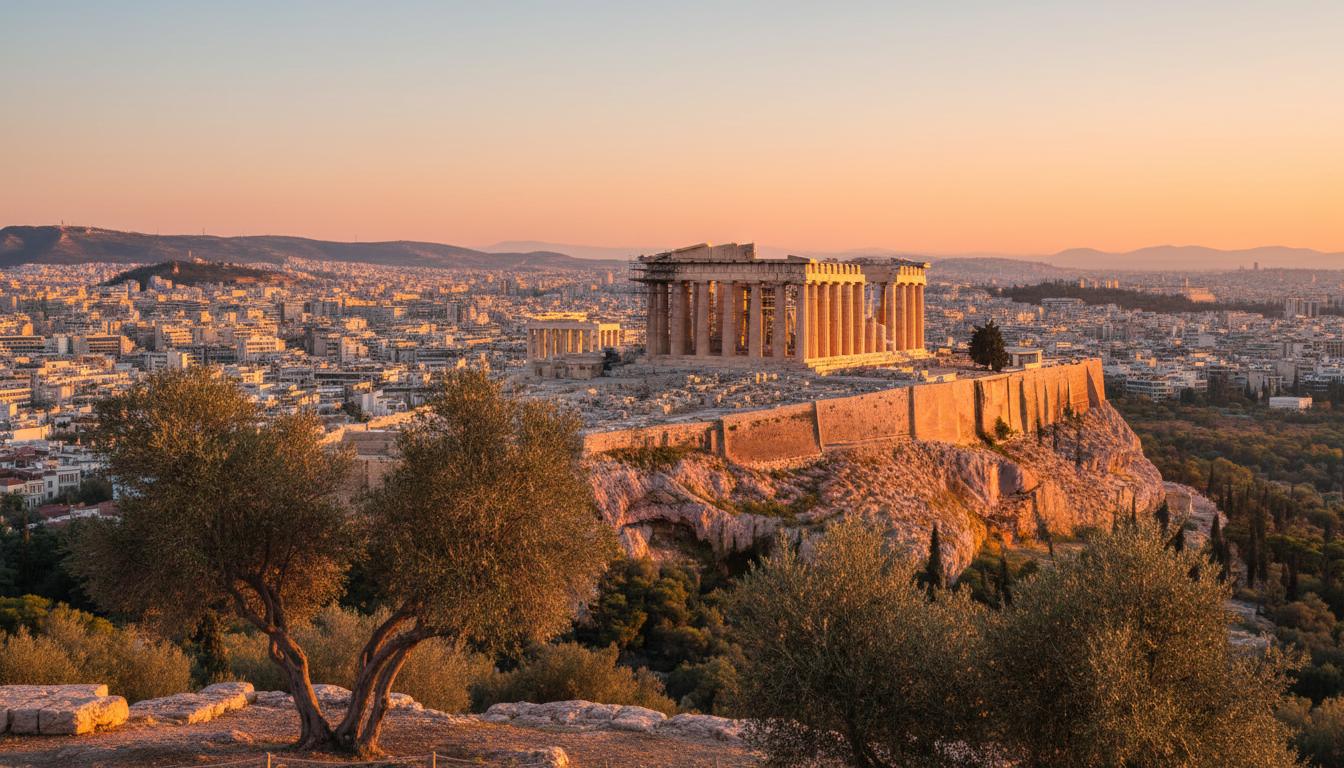
In Athens, the ancient world is not confined to museums. It organises street names, sightlines, schoolbooks, state imagery, tourism and the commercial vocabulary of everyday objects. Designers work inside an infrastructure of recognition so powerful that even refusal becomes a response to antiquity.
The interesting question is therefore not whether a new object refers to the past, but how consciously it handles a reference that is already everywhere. Does it repeat, translate, contradict, miniaturise, domesticate or make the inherited form useful?
The economy of the familiar symbol
A familiar motif shortens the sale. The buyer recognises Greece before reading the label, and the object receives cultural meaning at very low explanatory cost. This efficiency can support good design, but it can also protect weak material and anonymous manufacture from scrutiny.
The editor’s task is to slow the symbol down. Who drew this version? Who produced it? Is the reference exact or generic? What remains when the motif is removed? Familiarity should open the inquiry, not close it.
The present deserves documentation
Ancient sources often arrive with catalogues, scholarship and institutional authority. Contemporary makers are too easily left with only a first name, a shop tag or a poetic paragraph. The imbalance makes the past appear precise and the present decorative.
Keep the modern record: designer, workshop, material, date, edition, service and the maker’s explanation of the source. Documentation is one way of granting contemporary Athens the seriousness routinely given to antiquity.
What changed?
The strongest Athenian object answers two questions. What did it inherit? What did the current maker change?
A third question completes the purchase: how will it live now? The jewel must be serviced, the sandal walked in, the vessel used, the skincare tolerated, the print identified and the food carried lawfully.
Athens does not need design to escape antiquity. It needs design confident enough to argue with it—and practical enough to survive the argument.
Continue through ORBIS Journal and the Athens city guide.