24 Rue du Faubourg Saint-Honoré, Paris / Worldwide / Online
Hermès' historic flagship at 24 rue du Faubourg Saint-Honoré, Paris, where Charles-Émile Hermès moved the workshops and opened a store in 1880. The house later expanded across neighboring numbers, including No. 28 in 2007; the address remains the Paris anchor for its leather goods, silk and saddlery heritage.
Best for Birkins, Kellys, carrés, and saddle-stitched leather.
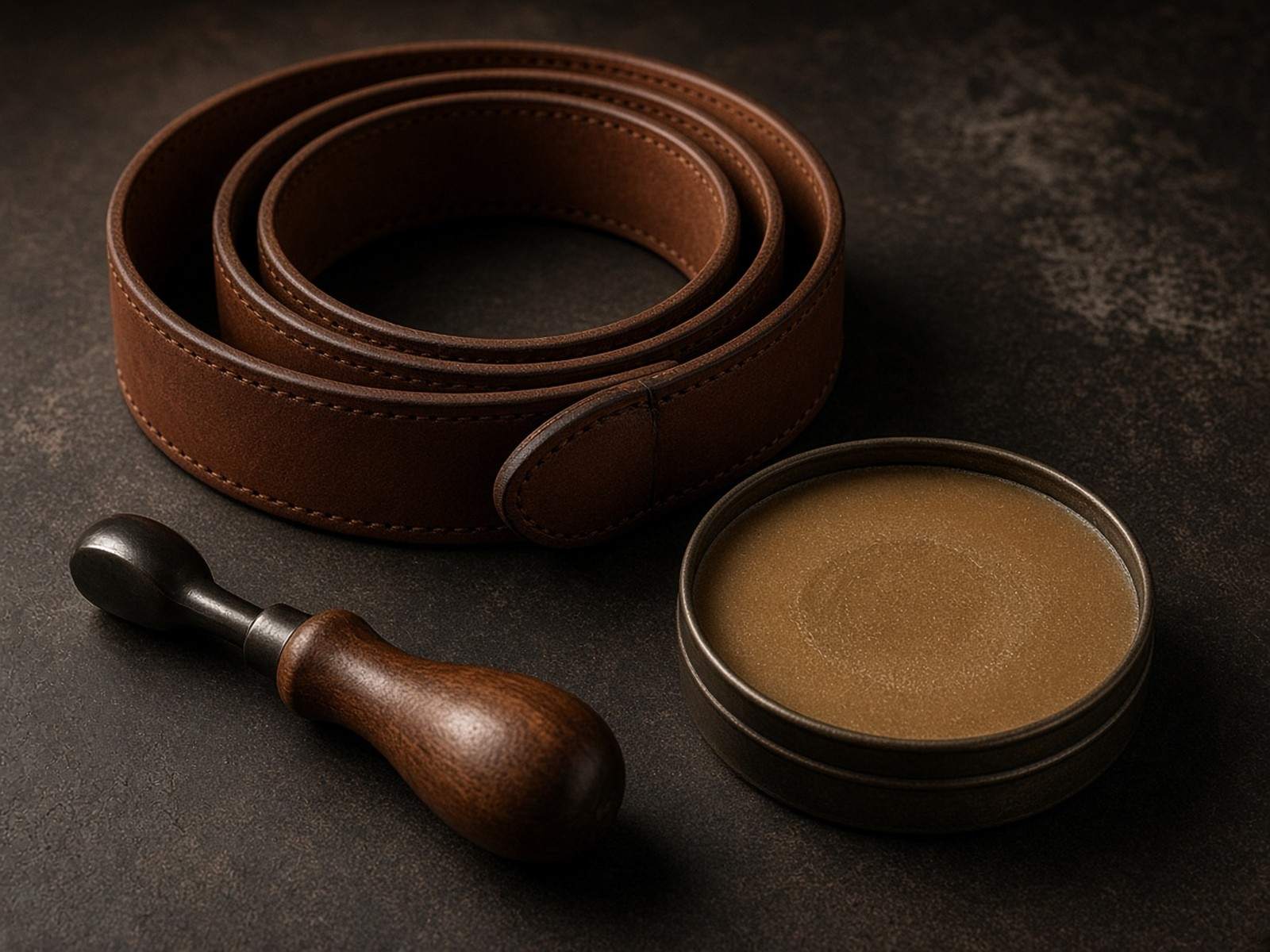
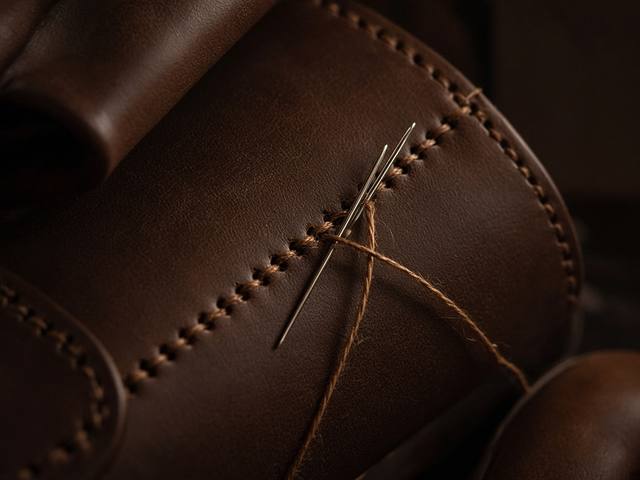
Every luxury house claims craftsmanship; one house is structured by it. Hermès began in 1837 as a saddler — harness and tack for the carriages of Paris — and the saddle never left the building. The stitch that holds a Birkin together is the saddle-stitch: two needles, one waxed thread, crossing inside each hole, a seam that cannot unravel the way a machine's lockstitch can. It is slower. It is stronger. It is the whole company in one technique — the refusal to substitute the faster thing for the better thing.
The bags carry the fame: the Kelly, named for a princess who used hers to shield a pregnancy from photographers; the Birkin, born from an airplane conversation and now the most waited-for object in luxury. But the house's soul distributes evenly across its counters — the silk carrés whose hand-rolled edges are a craft of their own, the leather goods, everything made in France by artisans whose training is measured in years before they touch a sellable piece.
Craft above all is not Hermès's slogan; it is the org chart. The house famously declines the shortcuts its scale would permit — and the address on the Faubourg Saint-Honoré, number 24, has watched the entire modern luxury industry assemble itself around what this saddler declined to change. Competitors advertise heritage. Hermès simply continues it, two needles at a time, at the same address, for going on two centuries.
The most secretive Parisian trunk maker (1853) — Goyardine canvas, hand-painted chevrons, and a house policy of no advertising.
Best for Saint Louis totes and hand-painted personal stripes.
Goyard's marketing department does not exist, and that absence is the most successful campaign in luxury. Since 1853, the Parisian trunk maker has declined to advertise — no campaigns, no ambassadors, no explanations. The house lets one thing speak: the Goyardine canvas, its chevron pattern painted by hand, dot by raised dot, a texture no photograph fully carries and no counterfeit fully survives.
The discretion is structural, not shy. Goyard understands the oldest law of luxury: scarcity of information is scarcity. The client who knows, knows; the client who asks has been given a small test. Prices are discussed in boutiques. History is dispensed in fragments. The house that equipped the great travelers of the nineteenth century treats the twenty-first century's demand for content as a fashion that will pass, as most have.
What remains constant is the object. The trunks and bags are built as luggage first — the maison's origin is travel, and the construction still assumes a journey: rigid, painted, corners protected, initials applied by brush for clients who want their discretion personalized. The chevrons read from across a room to the initiated and read as nothing at all to everyone else, which is precisely the transaction: recognition without announcement.
The ultimate discreet luxury is a title with one holder. You do not find Goyard — no algorithm will push it to you, no campaign will explain it. Goyard permits itself to be found, at its own pace, by the travelers who were always going to arrive.
Gabrielle Chanel opened a millinery at 21 Rue Cambon in 1910 and moved to 31 Rue Cambon in 1918 — the address, with its mirrored staircase to her private apartment, remains Chanel's flagship couture house and boutique today.
Best for The 2.55 and tweed jackets.
Gabrielle Chanel opened at 31 Rue Cambon in 1918, and the address remains the center of the house that rewrote women's clothing: jersey when it was underwear fabric, the little black dress, the braided-trim tweed suit, costume pearls worn without apology, and in 1921 a perfume — N°5 — that became the best-known fragrance on earth. Karl Lagerfeld's long tenure turned her codes into a renewable language; the house continues to speak it fluently. Rue Cambon is a pilgrimage site: the mirrored staircase from which Mademoiselle watched her shows survives above the boutique. The classics justify their status — a 2.55 or 11.12 flap bag, a tweed jacket, N°5 in parfum concentration — and the beauty line's lipsticks make an accessible first purchase. Few houses offer objects this canonical from a single doorway.
Ask about the Rue Cambon staircase when visiting the mother store; even from the boutique floor, standing in the founder's building changes the purchase.
Humanistic capitalism from a restored Umbrian hamlet — cashmere and tailoring made entirely around Solomeo. Cucinelli bought and restored Solomeo's medieval castle/tower as company headquarters after marrying and moving to his wife Federica's hometown. library, 240-seat theatre, and a school for tailoring, gardening and masonry in the hamlet.
Best for Dove-grey cashmere and Italian gentleman dressing.
Brunello Cucinelli built his cashmere house in Solomeo, a fourteenth-century Umbrian hamlet he has progressively restored — theatre, library, vineyards — as the physical expression of what he calls humanistic capitalism: fair wages, dignified hours, profit in proportion. The clothes embody the same philosophy. Cucinelli made his name dyeing cashmere in unexpected colors in the late 1970s, and the house still turns on knitwear: unstructured jackets, layered neutrals, the quietly luxurious wardrobe that came to define 'quiet luxury' before the phrase existed. Everything is made in Italy, much of it in Umbria itself. The Solomeo headquarters is a destination in its own right — a working argument that a factory can be beautiful and a business can be an ethical project. Start with the knitwear; the greys and earth tones are the house's native language.
If visiting Umbria, book lunch in Solomeo itself — the village restaurant and the workshops together are the philosophy made visible, and visitors are welcomed.
Christian Dior's house, founded 1946 in Paris; the 1947 'New Look' — Bar-jacket architecture and couture romance — redefined postwar fashion, and the Lady Dior bag (1994) remains its signature. Florence boutiques sit on Via de' Tornabuoni and Via degli Strozzi.
Best for Lady Dior and Book Totes.
Christian Dior's first collection in February 1947 was named the New Look on the spot, and no debut in fashion history had comparable effect: cinched waists and extravagant skirts that ended wartime austerity overnight and re-established Paris as fashion's capital. The house he founded at 30 Avenue Montaigne has since passed through a remarkable succession of designers — Yves Saint Laurent at twenty-one, Marc Bohan, Ferré, Galliano, Raf Simons, Maria Grazia Chiuri — each reinterpreting the founder's codes: the Bar jacket, the cannage quilting, the Lady Dior bag named for Princess Diana, Miss Dior perfume. The Florence boutique on Via della Vigna Nuova delivers the full range in concentrated form. The Lady Dior and Bar jacket remain the objects that carry the archive most directly; the beauty line offers the house at accessible scale.
The Lady Dior rewards buying in the smaller sizes where the cannage proportions are most faithful to the original; the beauty counter's lip products are the honest entry point.
Loro Piana has specialized in cashmere, vicuña and extrafine wool since 1924, with material expertise spanning rare Andean vicuña, baby cashmere and fine wool processed through its Italian textile tradition.
Best for Cashmere knits, one-piece collar polos, and the summit of quiet luxury.
The Loro Piana family traded wool in Piedmont from the early nineteenth century; the modern house, seated in Quarona since 1924, became the world's foremost buyer and weaver of superlative fibers — baby cashmere combed from Hircus goat kids, vicuña from the Andes (a species the company helped bring back from near-extinction through conservation agreements), extra-fine merinos secured at auction records. The clothing exists, in a sense, to serve the fiber: unlogo'd knitwear, jackets, and accessories whose entire argument is made by hand-feel. The Open Walk suede shoe and the cashmere sweaters are the recognizable staples of the quiet-luxury wardrobe the house defined decades before the term existed. All of it is made in Italy, within reach of the Quarona mill. Touch before buying elsewhere: Loro Piana is the calibration standard against which softness claims across the industry are honestly measured.
The baby cashmere pieces justify their premium by hand-feel alone; compare one against ordinary cashmere in the store and the fiber hierarchy becomes obvious.
Veneto leather atelier of the intrecciato weave since 1966 — logo-free luxury from Montebello Vicentino. Atelier housed since 2013 in late-18th-century Villa Schroeder Da Porto at Montebello Vicentino, with an on-site artisan school (Accademia labor et ingenium).
Best for Woven leather bags and quiet-luxury accessories.
Bottega Veneta was founded in Vicenza in 1966, in the Veneto leatherworking country that still anchors its production, and built its name on a single technical idea: intrecciato, the hand-woven leather lattice its artisans developed to give soft leather structure. The house's original motto — 'when your own initials are enough' — announced a philosophy of luxury without visible logos, letting the weave itself serve as signature. That discretion has kept Bottega collectible across decades of fashion cycles: the woven pouches, Cassette bags, and Jodie hobos are recognized at a glance by texture alone. The craft is genuinely demanding — intrecciato pieces are woven by trained hands in Veneto ateliers — and the house runs its own school to sustain the skill. Come for leather goods above all; the weave is the argument, and no other house makes it.
Check the weave's edges when buying: on a true intrecciato piece the strips run continuously into the seams, the quiet proof of the hand assembly.
Charvet is a Paris shirtmaker founded in 1838 and long associated with Place Vendôme, specializing in bespoke and ready-to-wear shirts, ties and accessories. Chanel acquired the house in July 2026, adding a major ownership change to an otherwise unusually continuous tailoring history.
Best for The bespoke shirt pilgrimage of a lifetime.
Charvet has made shirts since 1838 and is generally recognized as the world's oldest French shirtmaker — founded by Christofle Charvet, whose father had charge of Napoleon's wardrobe, and installed for over a century at 28 Place Vendôme, where it remains the square's last shirtmaker. The client book is its own history: Proust wrote about the house, Churchill and Kennedy wore its collars, and the bespoke floors upstairs still cut shirts to individual paper patterns from an inventory of thousands of fabrics, including the one-piece collar for which connoisseurs make the trip. The shirts are made in Saint-Gaultier, France. In July 2026 the house was acquired by Chanel, placing it within a group committed to preserving métiers. This is not e-commerce territory: the point is the appointment, the fabric wall, and a shirt cut for no one else.
Book the bespoke appointment ahead and allow time at the fabric wall — choosing among the thousands of shirtings is the visit's actual luxury.
The trunk-maker of 1854 turned luxury's superpower — monogram canvas, artist collaborations, and the world's most valuable maison.
Best for Monogram leather and travel icons.
Louis Vuitton, a trunk-maker's apprentice who walked to Paris from the Jura as a teenager, opened his own workshop in 1854 and solved a practical problem — flat-topped, stackable trunks for the railway age — so well that the house built on them became the largest luxury brand on earth. The Damier check of 1888 and the Monogram canvas of 1896, created partly to defeat counterfeiters, are among the most recognized patterns in existence. Trunks are still made at Asnières, the family workshop outside Paris, where special orders continue more than a century and a half of case-making. The fashion house layered atop the luggage — from Marc Jacobs' first ready-to-wear through the current era — renews itself continuously, but the permanent collection is the foundation: Speedy, Keepall, Neverfull, and hard-sided pieces that connect directly to 1854. The Florence boutique concentrates the range on Via della Vigna Nuova.
The hard-sided pieces and special orders connect most directly to Asnières; ask about hot-stamping initials, the house's oldest personalization, offered on most leather goods.
The summit of Neapolitan tailoring — fully hand-sewn suits from its Arzano ateliers, bespoke and beyond. On 30 April 2026 the Arzano industrial street that has hosted Kiton's headquarters since 1991 was renamed Viale Ciro Paone (ex Viale delle Industrie).
Best for Hand-sewn Neapolitan suits and cashmere outerwear.
Ciro Paone, a fifth-generation Neapolitan fabric merchant, founded Kiton in Arzano in 1968 on a maximalist bet: 'the best of the best plus one' — that a market existed for tailoring with no cost ceiling whatsoever. The factory he built employs hundreds of tailors producing a deliberately limited number of suits, each consuming many hours of handwork in the soft Neapolitan style: floating canvas, shirt shoulders, buttonholes sewn by hand. Kiton buys extraordinary fibers — rare wools and cashmeres, some in vintages like wine — and runs its own tailoring school in Arzano to guarantee the next generation of hands. The house remains family-owned. The suits and sport coats are the summit; the sportswear line carries the fabric obsession into casual clothing. For those who ask what the ceiling of ready-to-wear tailoring looks like, Kiton is the empirical answer.
Handle the fabrics before anything else — the house's rare-fiber cloths explain the prices more persuasively than any salesperson can.
The house of le smoking — Anthony Vaccarello’s sharp-shouldered Parisian seduction on Rive Gauche foundations laid in 1961. Past seasons of the Rive Gauche line reach The Mall outlet at Leccio Reggello, outside Florence.
Best for Le smoking energy, Kate bags and rock-precise tailoring.
Yves Saint Laurent, who had succeeded Dior at twenty-one, founded his own house with Pierre Bergé in 1961 and proceeded to hand women the male wardrobe: Le Smoking tuxedo in 1966 — photographed by Helmut Newton into permanent iconography — the safari jacket, the pantsuit, the sheer blouse. His 1966 Rive Gauche line made him the first couturier to take ready-to-wear seriously as a creative act rather than a diffusion. The house's Paris archives are now a museum in his former studio. Under its current direction the label trades in sharp-shouldered, rock-inflected tailoring that keeps faith with the founder's silhouette. The Mall outlet outside Florence offers the house at reduced prices — worthwhile for the tailoring and leather goods, where the design constants hold. A black YSL blazer remains one of fashion's few genuinely permanent purchases.
At the outlet, hold out for the tailoring and leather rather than logo pieces — the cut is the house's permanent asset and discounts on it are the real find.
Heir of the man who invented the unstructured Neapolitan jacket — hand-made perfection, no compromise. Historic workshop was on Via Vetriera; current flagship is on Via Filangieri. Robb Report (2010) says Vincenzo designed the slimmer, high-armhole jacket while working for Gennaro Rubinacci, then opened his own shop at 12 Via Vetriera before WWII.
Best for The original soft jacket, hand-made throughout.
The Attolini name carries a specific historical claim: in the 1930s, Vincenzo Attolini, working in Naples, deconstructed the stiff English jacket — removing padding and structure to create the soft, unlined Neapolitan style whose natural shoulder and fluid drape now define an entire school of tailoring. His descendants formalized the family house under the Cesare Attolini name, and it remains family-run, producing jackets that pass through extraordinary quantities of handwork in its Neapolitan workshops. Nothing about the operation is scaled for volume; the house makes limited numbers and dresses clients who want the original article rather than the style's many imitations. The jackets are the point — spalla camicia shoulders, hand-sewn throughout — with trousers, shirts, and outerwear in support. For students of tailoring, this is a pilgrimage: the source of the softest silhouette in menswear.
Try a jacket one size from your usual — the unstructured cut fits closer to the body than padded tailoring, and the house's proportions surprise first-time wearers.
Milanese intellectual luxury since 1913 — nylon revolutions, Galleria bags, and fashion's sharpest brain. In 1919 Prada was appointed Official Supplier to the Italian Royal Household and incorporated the House of Savoy coat of arms and knotted-rope device into its logo. Original Galleria shop still displays mahogany shelving Mario Prada commissioned.
Best for Re-Edition nylon, Galleria bags, and directional fashion.
Mario Prada opened his luxury goods shop in Milan's Galleria Vittorio Emanuele II in 1913; the original store, with its mahogany fittings, still trades there. The modern house is his granddaughter Miuccia's creation: taking over in 1978, she made the counterintuitive move that defined it — black industrial nylon, the stuff of army tents, turned into handbags and backpacks that made utilitarian anti-luxury the height of fashion. Prada became the intellectual pole of Italian style, its collections read as essays, its Fondazione in Milan a serious contemporary art institution. The nylon (now regenerated Re-Nylon), the Saffiano cross-hatched leather Mario used for trunks, and the triangle logo are the house codes. The Galleria store is the pilgrimage: buy the nylon there, where the house began — the object that proved luxury could be a concept rather than a material.
The Re-Nylon pieces are the historically resonant purchase; in Milan, pair the Galleria store with the Fondazione for the house's full intellectual range.
Rome jewelry house founded in 1884 by Greek silversmith Sotirio Bulgari, who opened his first boutique on Via Sistina; the flagship moved to Via dei Condotti in 1905, where it became a fixture of Rome's 'Dolce Vita' era. Known for the Serpenti coil motif and bold cabochon-set high jewelry.
Best for Serpenti jewels and Roman high jewelry.
Jewelry houses borrow from antiquity; Bulgari behaves like its heir. Founded in Rome in 1884, the house works as if the classical world were not a museum but a supplier — coins set into gold, cabochons cut bold and domed where Paris whispers in facets, colored stones combined with an appetite the Romans would have recognized as their own. The result reads instantly: this is jewelry from the city of emperors, made by a house that never saw a reason for restraint to be the only form of taste.
The Serpenti is the thesis worn on the wrist: a snake of gold and enamel coiling as if excavated from a villa and improved by modern hinges — antiquity, engineered. It slithers through the house's history from watches to high jewelry, the emblem of a maison that treats glamour as a Roman birthright. Via Condotti, at the foot of the Spanish Steps, is the ancestral address: the boutique where the dolce vita bought its jewels and the twentieth century's most photographed women stopped between films.
Everything is handcrafted in Rome from precious stones and metals, and the Roman-ness is not a marketing note but a working method — the boldness of scale, the saturation of color, the conviction that a jewel should be seen across a piazza. Paris made jewelry an etiquette. Rome, through Bulgari, kept it an appetite.
Roman couture house founded in 1960 by Valentino Garavani on Via Condotti — home of the signature rosso red; since 1967 its creative studios and couture ateliers have worked from Palazzo Mignanelli, adjoining the Piazza di Spagna flagship.
Best for Rockstud accessories and red-carpet romance.
Valentino Garavani opened his Roman couture house in 1960 on Via dei Condotti and dressed the dolce vita at its height — Elizabeth Taylor, Jacqueline Kennedy (who wore Valentino for her wedding to Onassis), and decades of red carpets in the saturated shade the industry simply calls Valentino red. His all-white 1968 collection remains a couture landmark. The founder retired in 2008 after a nearly fifty-year reign unusual for its consistency of vision: unapologetic beauty, Roman grandeur, extraordinary atelier handwork. Successors — most influentially Pierpaolo Piccioli — carried the couture spirit forward, keeping the Roman ateliers central and the red renewed. Rockstud accessories brought the house a modern signature in studs and leather. In Rome the house is at home: the couture salons remain in Palazzo Mignanelli, and a red dress or Rockstud purchase carries the city's DNA directly.
In Rome, walk past Palazzo Mignanelli near the Spanish Steps to see the couture house itself; the Rockstud pieces in the signature red are the portable version.
Rei Kawakubo’s republic — the Aoyama flagship behind the blue-dot glass tunnel, where clothing has argued with itself since 1969; enter curious, leave changed.
Best for The argument of fashion itself.
Rei Kawakubo founded Comme des Garçons in Tokyo in 1969 and, upon showing in Paris in 1981, detonated fashion's assumptions: black, asymmetric, deliberately unfinished clothes the press called 'Hiroshima chic' and history now calls the moment Japanese design conquered the West. Kawakubo has never softened — her collections remain conceptual arguments, her 2017 Met retrospective only the second given a living designer — while the house she built spans lines from the radical mainline to Play, whose heart-with-eyes logo made the avant-garde wearable by everyone. The Minami-Aoyama flagship in Tokyo is the mothership, its architecture as considered as the clothes. Enter through Play or the shirts if the mainline intimidates; collectors hunt the runway pieces. No living designer has held the line between art and clothing this uncompromisingly for this long.
The Aoyama flagship rewards visiting even without buying; architecture, staff dress, and hang of the clothes together teach what the label is arguing that season.
Roman fur-and-leather dynasty since 1925 — Baguettes, Peekaboos, and the Palazzo della Civiltà headquarters. house launched 1925 as a fur and leather shop on Via del Plebiscito; Karl Lagerfeld joined 1965; Silvia Venturini Fendi designed the Baguette in 1997 and the Peekaboo in 2009. HQ in Palazzo della Civiltà Italiana (EUR).
Best for Baguette bags and Roman-made leather craft.
Adele and Edoardo Fendi opened their Roman fur and leather workshop in 1925, and the house that grew from it remained a family matriarchy for decades — five Fendi sisters ran it together, hiring a young Karl Lagerfeld in 1965 for what became the longest designer-house relationship in fashion history. Lagerfeld drew the double-F logo and transformed fur from stiff status symbol into supple, experimental material; the Roman ateliers' leather mastery produced the Baguette in 1997, the small shoulder bag that became the first 'it bag' and remains the house signature, joined by the Peekaboo. Fendi's headquarters occupy the Palazzo della Civiltà Italiana, the colonnaded icon of EUR, binding the house permanently to Roman architecture. The Baguette and Peekaboo are the collectors' constants; the Selleria line shows the saddle-stitched leather craft at its most traditional.
Ask to see the Selleria pieces stitched with the visible saddle stitch — the Roman leather craft that predates the fashion house survives most plainly there.
Parisian shoemaker since 1895 — the Alessandro wholecut, Venezia leather, and patina worked like watercolor. LVMH-owned, and still the summit of French men's shoes.
Best for Patinated Venezia-leather shoes, from Alessandro wholecuts to bespoke.
Alessandro Berluti, an Italian craftsman, established his Paris bootmaking house in 1895; four generations of the family shaped it, none more visibly than Olga Berluti, who developed the house's defining art — the patina. Berluti shoes are colored not by dyed leather but by hand-applied translucent washes built into cognacs, plums, and blues of unusual depth, often over Venezia leather, the house's supple calfskin. The result made shoes into objects closer to polished furniture or old paint. The Andy loafer, named for Warhol, is the emblematic model. Under LVMH ownership the house expanded into a full menswear wardrobe and leather goods carrying the same patinated surfaces and its scritto motif — eighteenth-century calligraphy engraved into leather. Bespoke remains at the summit in Paris. The classic models in a hand-finished patina are the essential Berluti: color as craft.
Existing pairs can be sent for re-patination as colors evolve with wear; the service, like the original finish, is done by hand and worth using.
Founded as a Florentine leather house in 1921 — the double-G empire still rooted in Tuscan workshops. Guccio Gucci worked as a porter at London's Savoy hotel (from 1897) before opening the Florence shop in 1921 on Via della Vigna Nuova.
Best for The icons: Horsebit loafers, Jackie bags, and full-look luxury.
Guccio Gucci, who had absorbed luxury's theatre working at the Savoy in London, opened his Florentine leather goods shop in 1921, selling equestrian-inflected luggage and saddlery whose hardware — the horsebit, the green-red-green web stripe — became the house vocabulary. Wartime material shortages produced the bamboo-handled bag of 1947, still in production. The family saga that followed was operatic enough for cinema, but the house's Florentine craft base endured through every act, and its creative directors — Tom Ford's 1990s glamour, Alessandro Michele's maximalist archive-mining — each revived it by returning to the codes. The horsebit loafer, added to MoMA's collection, may be the single most-copied shoe in menswear. Florence is the right city to buy: the house began here, and the loafer, the bamboo bag, and the web stripe all carry the origin visibly.
The Gucci Garden in Piazza della Signoria adds archive rooms and a Bottura restaurant to the Florentine pilgrimage — see it before buying at the flagship.
The tiny Riviera di Chiaia shop tying the world's most famous seven-fold ties since 1914 — presidents dressed here. Original shop is 20 m². In the 1980s Italian president Francesco Cossiga presented boxes of five Marinella ties to visiting heads of state.
Best for Hand-made Neapolitan ties and small leather gifts.
Eugenio Marinella opened his small shop on Naples' Riviera di Chiaia in 1914 with a specific ambition: to bring English gentleman's style to Naples, better made. The house became famous for one object — the seven-fold-quality tie, cut generously from English-printed silks in small-scale patterns, hand-finished in Naples — and its client list grew to include presidents, royals, and statesmen who order by the dozen. The shop itself is tiny and largely unchanged, opening early in the Neapolitan tradition, with the espresso offered to morning customers part of the ritual. Ties remain the core: the silks are selected in England, made up by hand in Naples, and the house's proportions — slightly wider, unmistakably its own — have resisted every trend. A Marinella tie is Naples' most exportable object: a century of one family doing one thing at the highest level.
Arrive early in the morning as Neapolitans do; the small shop rewards the quiet hour, and the seasonal printed silks sell through quickly.
The trench itself — Thomas Burberry’s gabardine since 1856, the check, and the flagship house of British luxury. Past-season trench and check pieces reach The Mall outlet at Leccio Reggello, outside Florence.
Best for The trench coat and check heritage, done properly.
Thomas Burberry founded his outfitter's business in Basingstoke in 1856 and changed outerwear permanently with gabardine — the tightly woven, weatherproof cotton he developed and patented, which clothed polar expeditions and, in the First World War, produced the trench coat whose name records its origin. The trench remains the house's central object: the check lining, the D-rings, the storm flap all descend from function. A century and a half on, Burberry is Britain's largest luxury house by revenue, cycling through creative directors while the coat holds steady at the center. The heritage trenches — Kensington, Chelsea, Waterloo cuts — are made in England and worth buying over fashion pieces; they outlast trends by design. The check, over-exposed in the 1990s and carefully rehabilitated since, is best worn where it began: inside the coat.
Have a heritage trench altered rather than sized up — the coat is cut to layer over tailoring, and a proper sleeve length transforms how it reads.
From its 1910 Trivero wool mill to global menswear power — fabric-first tailoring and the Oasi Zegna forest. In the 1930s the founder planted about 500,000 conifers around the mill; the third generation established Oasi Zegna (c. 100 km²) in 1993.
Best for Suiting fabrics, Triple Stitch shoes, and refined menswear.
Most fashion houses buy their cloth. Zegna is its cloth. The house began in 1910 not as a tailor but as a wool mill in Trivero, in the Biella mountains where Italian wool-making concentrated its genius — and everything Zegna has become grows upward from that thread. The Lanificio still weaves in Piedmont; the suits, the Triple Stitch shoes that carried the house into the weekend, the entire menswear power built on top — all of it stands on fabric the family makes itself, fiber to finish.
That vertical truth changes what the brand means. When Zegna promises quality, it is not vouching for a supplier; it is signing its own work at every stage. The mill's pursuit of finer and finer fibers — the endless refinement of wool that behaves like a liquid — is the house's actual R&D, done in the same valley for over a century.
And then there is the founder's largest product. Around the mill, Ermenegildo Zegna planted a forest — Oasi Zegna, a mountainside of conifers and rhododendrons grown over decades into a vast natural park, free to enter, older than most of the company's competitors. It reframes everything: a wool house that understood a century ago that its raw material was landscape, and invested accordingly. Cloth, clothes, and the mountain that grows both — Zegna's supply chain is visible from space, and it is green.
Born 1952 in Monestier-de-Clermont outfitting Alpine expeditions — down quilting carried from Grenoble base camps to Milanese runways.
Best for Luxury down jackets and Genius collaborations.
Moncler began in 1952 in Monestier-de-Clermont — the name contracts the village's — near Grenoble, making quilted sleeping bags and tents, then down jackets for mountain workers; its equipment clothed the French expedition that summited Makalu and outfitted French Olympic teams. The migration from alpine equipment to fashion accelerated after Remo Ruffini acquired the house in 2003 and moved it to Milan, reframing the down jacket as a design object through the Genius collaborations with rotating designers. The result created an entire category — luxury outerwear — that barely existed before. The Maya jacket, glossy and quilted, is the recognizable classic; the Grenoble line keeps genuine ski performance in the range as a reminder of origins. A Moncler piece is the rare fashion purchase whose technical ancestry is real: the house made expedition equipment before it made statements.
Check the interior label grading and down specifications; the Grenoble technical line is warmest per weight, the Maya the fashion classic, and they fit differently.
The zigzag knit dynasty — space-dyed knitwear woven in its Varese-province factory since 1953. First zigzag on Missoni FW 1967 via unorthodox raschel-machine use. Sumirago factory built 1969.
Best for Zigzag knits and joyful Italian color.
Ottavio Missoni, an Olympic hurdler who had made knitted tracksuits, and Rosita Jelmini, whose family made shawls, married in 1953 and built their knitwear house in Sumirago, north of Milan, where it remains. Their machines produced what no one else's did: zigzags, flame stitches, and stripes in dozens of colors per garment, turning knitwear from cardigan conservatism into kaleidoscopic fashion. The zigzag became one of the few instantly attributable patterns in clothing — recognizable across a room without a logo. The house stayed a family affair through generations, extending the pattern language into a substantial home collection of blankets, cushions, and towels that many consider the most successful fashion-to-home translation in the industry. Knitwear remains the heart: a Missoni cardigan or scarf carries the entire house in one object, and vintage pieces trade actively because the language has never dated.
Buy the knits a touch generous — the patterns read best with drape — and consider the home line's blankets, which carry the same looms into daily use.
Paris jeweler founded in 1847 by Louis-François Cartier; earned a royal warrant in 1856 and the title 'jeweler of kings'; introduced the Santos watch (1904), the Tank (1917), the panther motif (1914), and the Love bracelet (1969).
Best for Love bangles and Tanks.
"The jeweler of kings, the king of jewelers" — the phrase attached itself to Cartier because the client ledgers made it undeniable: crowned heads across Europe and beyond commissioned from the house, and the royal warrants accumulated like the pearls in its inventories. Since 1847, Cartier has occupied the precise point where jewelry becomes language — and its vocabulary is the most fluent in the business.
Three words do most of the talking. The Tank, born from the geometry of the machine age, made the rectangular watch permanent — a shape so correct it has never needed rescue or revival, only continuation. The Love bracelet turned commitment into hardware: an oval of gold that closes with its own screwdriver, jewelry as a small ceremony of intention. And the panther — Cartier's great familiar — prowls across brooches, rings, and watches, muscled in diamonds and onyx, the house's wildness kept precisely under control.
Made in France, the pieces travel as a portable court: wherever gold is taken seriously, Cartier's grammar is already understood. This Florentine address on Via della Vigna Nuova places the house in the city that practically invented the goldsmith's art — a respectful visit from the jeweler who went on to dress the kings Florence's bankers once financed. The red box, the screw motif, the panther's gaze: a hundred and seventy years of luxury's most complete sentence, still being written.
Roman power tailoring since 1945, hand-made in its Penne school-factory — Bond's suits from Abruzzo hands. 1959: Fonticoli opened production in his hometown Penne. 1985: Scuola di Alta Sartoria opened there. it closed 2020 and later reopened (16 students, average age 19; 800 of 1,300 course hours are sewing).
Best for The world's most polished suits.
Brioni solved the problem every luxury craft house eventually faces — where will the next hands come from? — by building a school. In Penne, a hill town in Abruzzo, the house founded in Rome in 1945 runs its own tailoring academy alongside its workshops: young cutters trained for years in the Brioni method before their work ever touches a client, the town and the house grown into one continuous apprenticeship. Roman power tailoring is not just made in Penne; it is taught there, generation after generation, by design.
The result on the hanger is the suit at its most cinematic. Brioni dressed James Bond — the character whose tailoring is a plot point — and the fit that made 007 look invincible is the house signature: strong shoulders, a clean sweep, hand work throughout, the Roman conviction that a suit is armor that should photograph well. Where Naples softened the jacket, Rome polished it; Brioni is that polish at its highest grade.
Every suit is hand-made in the house's own facilities — no license, no outsourcing of the thing itself — which is what the Penne academy protects: a supply chain of skill. Luxury houses can buy fabric, buildings, and campaigns; they cannot buy a town that has been training tailors for them since the postwar years. The world's most polished tailoring, taught, made, and guarded in one place — and measured, fitted, and worn wherever power dresses for the camera.
Carla Sozzani's pioneering concept universe — fashion, art, books, and the courtyard café that invented the genre. Established 1991.
Best for Curated fashion-art-design discovery.
Founded in Milan in 1991, 10 Corso Como brought fashion and design retail together with an art-and-photography gallery, bookshop and courtyard café in a former garage at Corso Como 10. The house describes the format as a “living magazine”: the reason to visit is the relationship between the fashion edit, books, exhibitions, design objects and café rather than any single label. Allow time to move between the different spaces instead of treating it as a conventional boutique; that cross-category curation is the point of the original Milan address.
Bologna shoemaker since 1929 — Amedeo Testoni's Bolognese construction method defines lightweight Italian footwear craftsmanship.
Best for Bologna-construction comfort.
A.Testoni was established in Bologna in 1929 by Amedeo Testoni (born 1905), who trained through apprenticeship in Bologna's major shoe workshops before founding his own workshop. The brand became synonymous with the "Bolognese method"—a distinctive soling technique developed and perfected by Testoni. Amedeo's background as a third-generation shoemaker (his family worked in the trade for generations) provided both technical mastery and deep knowledge of materials and construction. The brand's reputation became significant enough that founders of other now-prominent Italian shoemakers (Stefano Branchini and Enzo Bonafe) both trained under Testoni, underscoring the technical excellence of his methods. Today, A.Testoni manufactures exclusively in Italy using premium leathers and fabrics, maintaining production close to Bologna where the founder first established his atelier nearly a century ago. The brand represents continuity of craft tradition—every shoe embodies the Bolognese construction principles refined from Amedeo's original specifications. The company remains relatively specialized, producing for clientele seeking Italian heritage footwear rather than volume or fashion-trend focus.
Giusti has aged balsamic vinegar in the attic barrel cellars, the 'Antiche Acetaie', of its Modena estate since 1605. The Strada Quattro Ville site pairs working production with the Museo Giusti and guided tastings, feeding six boutiques from Milan to Catania.
Best for Aged balsamico and gift-worthy vinegar flights.
Italian Eau de Cologne house founded in 1916, centered on Colonia’s signature bergamot-citrus profile and the brand’s distinctive Parma-yellow presentation.
Best for Colonia classics and leather-cased luxuries.
Some perfumes describe a place; one perfume is a color of light. Colonia, created in Parma in 1916, is Italian sunlight bottled — citrus opening like shutters thrown back on a bright morning, carried in the yellow hatbox that has become one of scent's most recognizable containers. The yellow is Parma's: the ochre of the city's walls, borrowed for a package that promises the contents before the cap comes off.
The house built itself on that single sustained note. Where French perfumery of the same era pursued complexity — the oriental, the chypre, the abstract — Acqua di Parma pursued clarity: the Mediterranean's citrus, Italian ingredients, a freshness that reads as civilization rather than sport. Colonia became the gentleman's scent of the Italian century, worn through the era when Italian style conquered the world's imagination, and it remains crafted in Parma from Italian citrus and Mediterranean materials — provenance you can smell.
The modern house extends the sunlight into leather-cased luxuries and the full grooming ritual, but everything radiates from the 1916 original: the conviction that a fragrance need not be a riddle. Colonia classics and their yellow boxes travel the world as portable Parma — the city's light, its walls' color, its name — a scent that has spent over a century proving that simplicity, done at this level, is the hardest trick in perfumery and the most durable one.
Melbourne's apothecary-design skincare — Resurrection hand balm and interiors worth the visit. Rechristened Aesop in 1989 after the Greek fabulist — both because Emeis sounded like an established beauty brand and to mock cosmetics puffery. L Oreal completed the acquisition in August 2023 for A$3.7 billion.
Best for Resurrection balm and gifts.
Founded in Melbourne in 1987, Aesop built a global skincare house on two convictions: that plant-based and laboratory ingredients should be chosen on evidence rather than fashion, and that no two stores should look alike. The amber pharmacy bottles are deliberately unglamorous — utilitarian labels, no celebrity campaigns — while the stores themselves are commissioned as individual works of architecture, each responding to its street and city. That inversion of luxury's usual priorities made Aesop one of the most imitated retail concepts of its generation. The product range stays disciplined: skin, hair, body, and fragrance, with the Resurrection hand balm and hand wash as the recognizable entry points. Visit a store as much for the interior as the shelf — the company treats each address as a design brief, and the results are consistently among the best-considered retail spaces in any city that has one.
Staff are trained to consult rather than sell; ask for a skin consultation and sample generously — the company's formulas reward matching to actual need over impulse.
The design factory on Lake Orta — Sapper kettles, Graves birds, and Italian design wit since 1921. 1983 Tea & Coffee Piazza research with Alessandro Mendini led to Michael Graves and Aldo Rossi entering the catalogue.
Best for Design icons for kitchen and table.
On the shore of Lake Orta stands the factory that taught the world's kitchens to smile. Alessi, founded in 1921, is Italian design's great translator — the house that takes the most serious architects and designers alive and asks them to make a kettle, a corkscrew, a citrus squeezer, and then actually manufactures the answer. Richard Sapper's kettle, with its melodic whistle, became the object that announced design had moved into the kitchen. Michael Graves's bird-spout kettle followed — the little red bird at the tip turning boiling water into a small daily theater — and between them they defined an entire category: the household object as wit.
That wit is the house method, not an accident. Alessi calls itself a design factory, and both words carry equal weight: the dreaming happens with the world's designers, but the making happens in Omegna, where the metalworking traditions of the lake district give the jokes their engineering. A funny object that fails is a gadget; a funny object built to last decades is design. Alessi's classics have now outlived the centuries they were designed in — the Sapper kettle whistles on, the Graves bird still perches — because the humor was always load-bearing.
The shop and the catalogue amount to a museum where everything is for sale: design icons for kitchen and table, a hundred years of Italian conviction that daily life deserves delight. Omegna made a bet in 1921 that beauty and function could share a factory floor. The kettles are still singing the result.
Lee McQueen’s house of savage beauty — razor tailoring, skull scarves and the Armadillo legacy, today under Seán McGirr within Kering. Its outlet door at The Mall in Leccio Reggello carries past-season razor tailoring outside Florence.
Best for Sharp tailoring and the McQueen legacy pieces.
<p>Lee Alexander McQueen founded his house in 1992 with a Savile Row education and an East London temper. Apprenticed at Anderson & Sheppard and Gieves & Hawkes before his Central Saint Martins master's collection was famously bought in its entirety by stylist Isabella Blow, he fused the two inheritances into something new: tailoring of surgical precision carrying imagery of romance and violence. The bumster trouser, the skull scarf, the armadillo shoe — provocations built on impeccable pattern-cutting.</p><p>The runway was his second medium. McQueen's shows — model spray-painted by robots, a hologram of Kate Moss in organza — remain the most quoted theater in fashion's history, and they were never decoration: each collection argued that beauty and brutality are cut from the same cloth.</p><p>After his death in 2010, Sarah Burton, his right hand of fourteen years, carried the house with a gentler hand — the Duchess of Cambridge's wedding dress its most-watched single garment — before Seán McGirr took the studio in 2024 under the Kering group. The tailoring discipline survives every era: whatever the image, the shoulder is always perfect.</p>
Amarelli has extracted and worked Calabrian licorice at its eighteenth-century 'Concio' in Rossano since 1731, on land where the family began cultivating the root around 1500. Every production phase from raw material to finished product still happens on site, and the pure liquirizia ships in the metal tins that made the house famous, with a licorice museum alongside the works.
Best for Pure-licorice pastilles and collectible tin gifts
Omani luxury perfume house founded 1983 at the request of Sultan Qaboos bin Said, working from Muscat and built on frankincense, myrrh and oudh; landmark scents include Jubilation XXV (2007, Bertrand Duchaufour) and Interlude Man (2012, Pierre Negrin).
Best for Regal incense compositions.
<p>Amouage was founded in 1983 by the Albusaidi family at the request of Sultan Qaboos bin Said, with Prince Sayyid Hamad bin Hamoud al Said overseeing its creation under a stated mission — 'The Gift of Kings' — to revive Omani perfumery for the world. The premise was audacious: that the ancient frankincense country could re-enter haute parfumerie at the very top, on its own materials.</p><p>The method made it work. Amouage builds on the Middle East's treasury — frankincense from Dhofar, myrrh, oudh — but composes with perfumers drawn from the great international houses rather than regional formula alone. The results carry both signatures at once: Jubilation XXV (2007, Bertrand Duchaufour), created for the house's twenty-fifth anniversary, and Interlude Man (2012, Pierre Negrin) have become modern references, with Gold, Epic, Dia, Reflection and Honour filling out one of perfumery's densest catalogues.</p><p>Everything is still made in Muscat, and the house now sells in more than eighty countries — incense-rich compositions worn like jewelry, the Sultanate's oldest export dressed for the twenty-first century.</p>
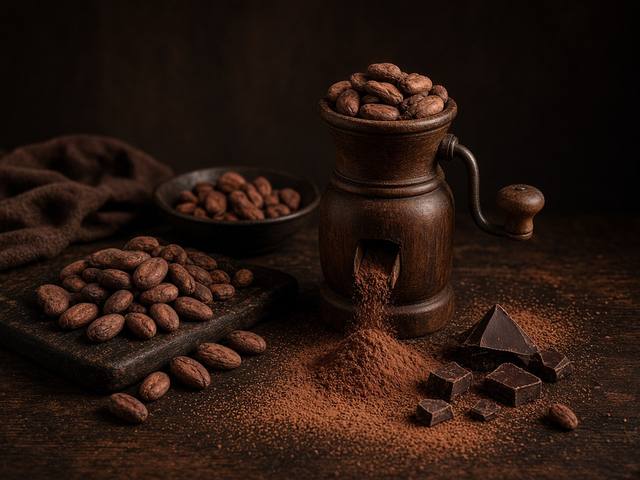
Founded in Modica in 1880 by Francesco Bonajuto after his family moved from ice selling into confectionery, Bonajuto describes itself as the oldest chocolate factory in Sicily still at work. Still cold-worked using the low-temperature, unrefined method of Aztec origin, without conching, producing the grainy Modica-style chocolate the town is known for.
Best for Grainy Modica bars in ancient flavors.
Antica Dolceria Bonajuto is a family-run chocolate maker in Modica, Sicily, generally cited as the oldest chocolate business in Sicily and among the oldest in Italy. The Bonajuto family were originally ice sellers in the Hyblaean Mountains before shifting toward pastry and confectionery in the first half of the 19th century; Federico Bonajuto bought a stone mill (frantoio) in 1853 to crush cacao beans for making bitter chocolate paste. His son Francesco formally opened the Dolceria in central Modica in 1880, and the business has continued under family ownership for six generations since. The shop's signature product is Modica chocolate (cioccolato di Modica), made by working cacao mass and sugar at low temperature without conching or refining — a method traced to Spanish colonial-era transmission of Aztec techniques — which leaves the chocolate with a distinctive grainy, unmelted-sugar texture rather than the smooth finish of conched chocolate. Bonajuto sells classic and flavoured bars (including chilli, vanilla, cinnamon and citrus variants), along with traditional Modican sweets such as 'mpanatigghi. In 2008 the business was included among Eurispes' list of 100 Italian excellences. The original shop remains in Modica's historic baroque centre and also ships internationally through its own website.
Among Rome's oldest pharmacies, founded 1552 by Andrea and Vincenzo Pesci; since 1911 housed at Piazza di Trevi 89 in the Palazzo Castellani, with original 16th-century apothecary cabinetry and a 1552 mortar still on display.
Best for Five-century apothecary remedies.
Antica Farmacia Pesci opened in 1552 as a spezieria (apothecary), founded at the pope's behest to distribute medicines to the poor of the neighborhood, and is credited as the oldest pharmacy in Rome. It was established by Andrea and Vincenzo Pesci before management passed to the Del Monaco family. Its location has moved twice: originally sited opposite the Acqua Vergine fountain in 1552, it relocated to Piazza Trevi in 1609, and moved into its current premises in 1911 - the ground floor of the nineteenth-century Palazzo Castellani at Piazza di Trevi 89, a few steps from the Trevi Fountain. The pharmacy has preserved its historic interior: dark wood cabinetry lined with antique boxes and jars, and a mortar dated to the shop's founding year of 1552.

 Visit official site ↗
 Visit official site ↗
 Visit official site ↗
 Visit official site ↗
 Visit official site ↗
 Visit official site ↗
 Visit official site ↗
 Visit official site ↗
 Visit official site ↗
 Visit official site ↗
 Visit official site ↗
 Visit official site ↗
 Visit official site ↗
 Visit official site ↗
 Visit official site ↗
 Visit official site ↗
 Visit official site ↗
 Visit official site ↗
 Visit official site ↗
 Visit official site ↗
 Visit official site ↗
 Visit official site ↗
 Visit official site ↗
 Visit official site ↗
 Visit official site ↗
 Visit official site ↗




 Visit official site ↗
 Visit official site ↗
 Visit official site ↗
 Visit official site ↗
 Visit official site ↗
 Visit official site ↗
 Visit official site ↗
 Visit official site ↗
 Visit official site ↗
 Visit official site ↗
 Visit official site ↗
 Visit official site ↗