ORBIS city feature
Dubai: The Platform Is Not the Provenance
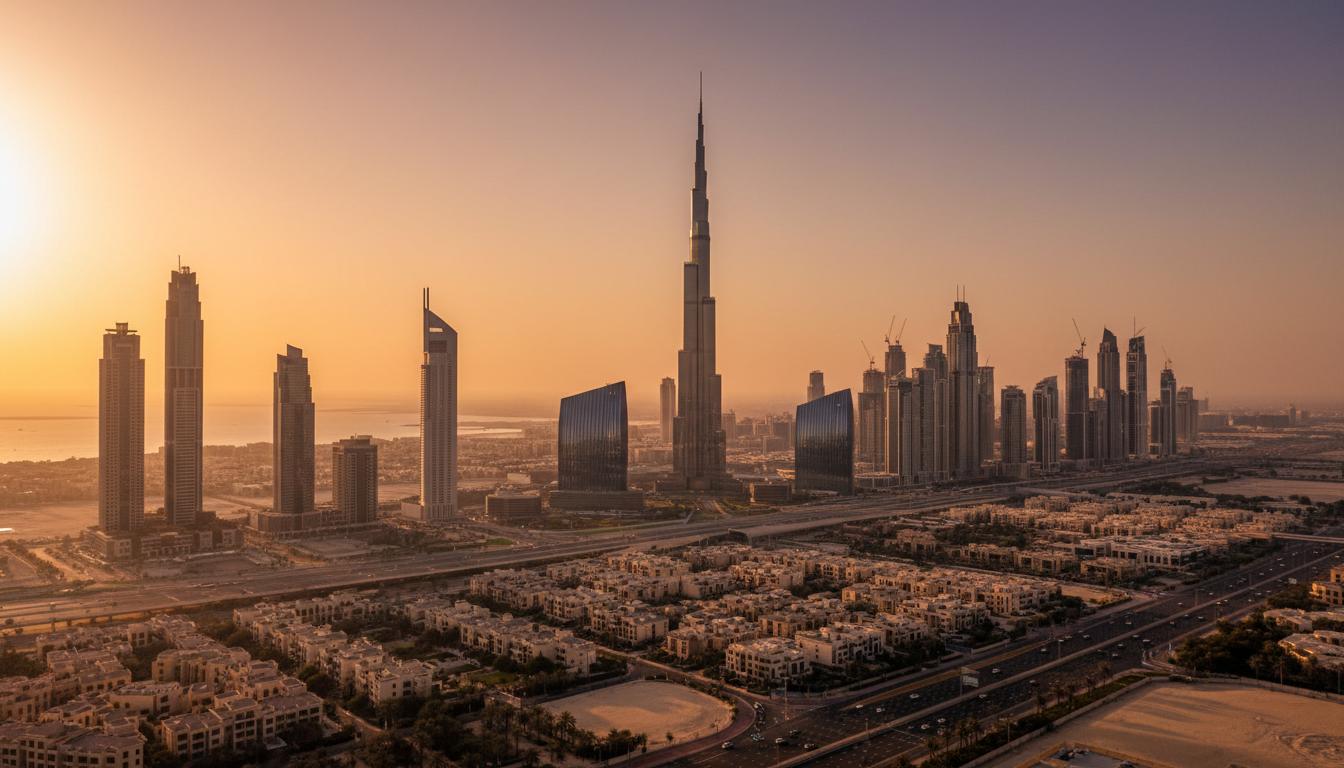
Dubai is one of the world’s most effective platforms for access, comparison and delivery. That achievement becomes misleading only when the platform’s efficiency is mistaken for the origin of the object moving through it.
A French bag, Italian watch, Indian diamond, Cambodian oud, Ethiopian coffee and Ghanaian cacao can all be purchased within a few kilometres, paid for quickly and wrapped as though the city had authored the object. That seamlessness is one of Dubai’s great achievements. It is also why the buyer must learn to separate platform from provenance.
The platform is not false. It is infrastructure: ports, airports, free zones, malls, markets, warehouses, finance, service and the confidence that almost anything can be moved. Provenance answers a different question. It identifies where the material came from, who transformed it, who designed it, who sold it and what can still be documented later.
Dubai matters most when those two stories are allowed to coexist.
The mall perfects access
A global luxury boutique in Dubai may offer better stock, multilingual service, longer hours and a smoother tax-refund process than the buyer’s home market. Those advantages are real.
They do not make the product Emirati.
The city’s contribution may be access, comparison, fitting, alteration, warranty support or a level of hospitality that makes a complex transaction easier. That is enough. A commercial platform does not need to borrow manufacture in order to be valuable.
The mistake begins when the address absorbs the object’s entire history.
Deira exposes the market beneath the image
The Gold Souk and Perfume Souk are powerful because they reveal categories in concentration.
Gold becomes weight, fineness, making charge and stone. Fragrance becomes oil, spray, incense, concentration and the unstable language around oud. Several sellers can be compared before the buyer commits.
Yet density does not produce automatic truth. A market district is not one seller, and a famous category is not one standard. The itemised quote, exact product name, treatment disclosure, invoice and service terms still matter.
Dubai’s market strength is comparative visibility. It is not collective authentication.
Fragrance turns provenance into material
Oud is especially revealing because the word carries geography, biology, ritual, scarcity and luxury at once.
A composition may use natural agarwood from a particular source, a small quantity within a larger blend, a reconstructed accord or no natural oud at all. The perfume can be beautiful in any of those forms. What changes is the claim.
Houses such as Abdul Samad Al Qurashi, Ajmal, Rasasi and Swiss Arabian give the city a deep comparison set. The most serious purchase does not ask which house owns the most romantic language. It asks which composition suits the skin and which description remains accurate.
Natural agarwood also refuses to stay inside the perfume counter. It leads to cultivation, trade, conservation and wildlife law. Provenance is not decoration. It changes the responsibilities attached to the bottle.
Al Quoz shows what Dubai can make
The clearest answer to “What has Dubai added?” often appears in Al Quoz.
At Mirzam Chocolate Makers, imported cacao becomes a Dubai-made bar through roasting, refining, recipe and design. At RAW Coffee Company, green coffee becomes a local roast and service relationship. At The Flip Side, records made elsewhere enter a Dubai music community. At KAVE The Story of Things, objects move through reuse, repair and discussion.
None of these stories depends on pretending the raw material originated in the emirate.
Their local value lies in transformation, editing and the public relationship around the product.
Design can be local without being simple
Contemporary Emirati design may draw on regional dress, architecture, movement and material culture while using international production. A garment can be designed in the UAE and made elsewhere. A shoe can translate a regional form through a contemporary factory. A studio can matter culturally without operating a daily public shop.
Hanayen, Tamashee and Aljoud Lootah Design Studio belong to this present-tense design conversation. The exact relationship—design, production, retail, appointment, commission—should remain visible.
Purity is not the standard. Legibility is.
Logistics are part of the object’s future
Dubai’s heat, air travel, tax procedures and international warranties alter the purchase.
Chocolate needs temperature control. Perfume needs shade and liquid planning. Jewellery needs documentation. Altered clothing needs enough collection time for inspection. Global luxury needs a service path that survives departure.
The city’s infrastructure makes these tasks easier when used intelligently. Speed should create room for verification rather than replace it.
Dubai’s real authorship
Dubai does not need every object sold there to have been born there.
Its distinctive authorship is often the system itself: the meeting of material, market, transformation, service and movement. The city becomes more credible when it names that contribution precisely.
The platform is not the provenance.
But a platform that makes provenance easier to see is a serious cultural achievement.
Return to the Dubai city guide or browse all Journal and buyer intelligence.