ORBIS city feature
Geneva: The Watch Is a Future Appointment
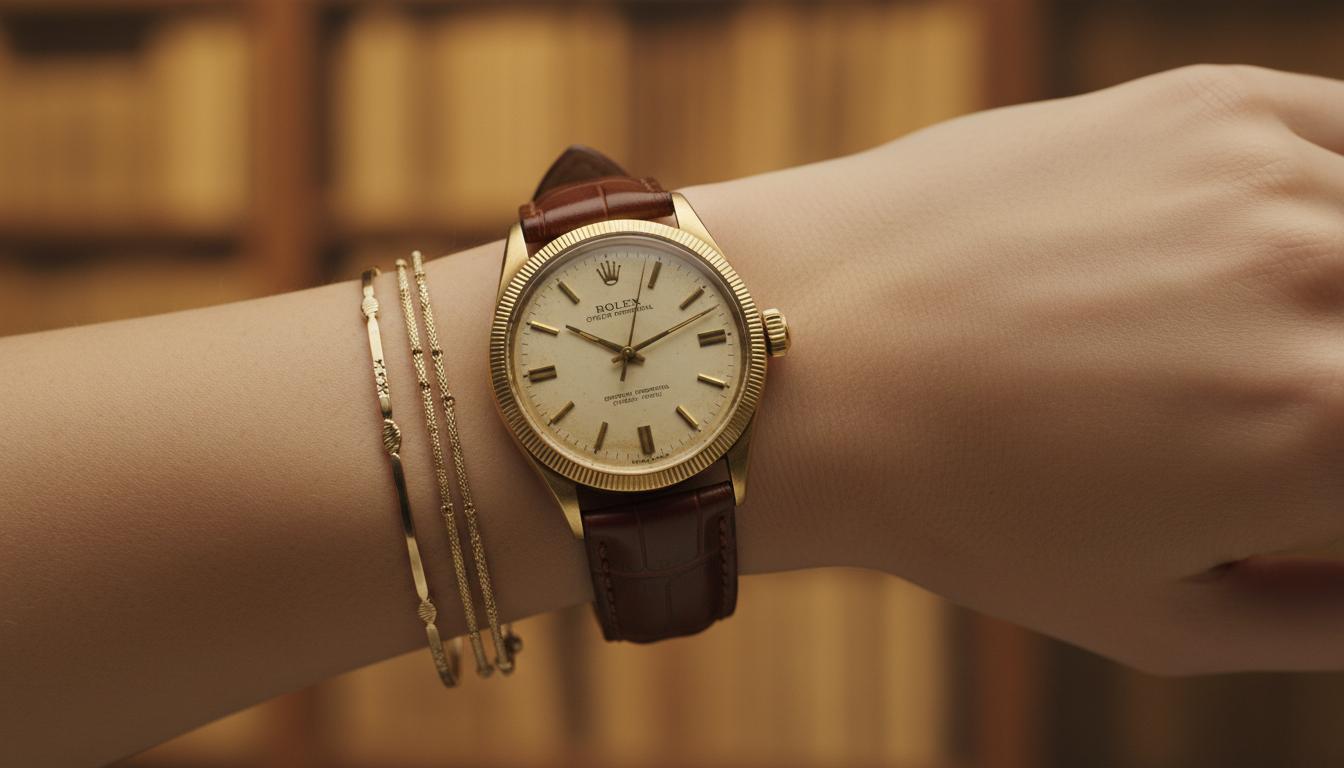
A watch bought in Geneva is not only an object of the present. It is a series of future appointments—with the wrist, the warranty desk, the service bench, replacement parts and the records that will one day explain its condition.
Geneva’s salons are designed to make the present feel complete: polished cases, controlled light, perfect straps, a movement explained as though it has reached its final form. The lake, the measured quiet and the city’s dense watchmaking history make precision feel environmental.
Yet the most important part of ownership begins later, when the watch needs adjustment, maintenance, restoration or a component the original buyer never imagined replacing.
The watch is therefore not only an object.
It is a future appointment.
Precision includes service
A mechanical watch measures time by containing wear. Oils age, seals weaken, parts move against one another and water resistance changes. None of this diminishes the object. It defines the service relationship that should have been part of the purchase from the beginning.
Ask where routine servicing will take place. Determine whether the work is performed locally, centrally or through an authorised network. Ask how replaced parts are documented and whether old parts are returned. Ask what polishing means for the case and whether it is optional.
The answers tell you whether the house imagines ownership beyond the sale.
A certification proves something specific
Geneva has the advantage of institutions that explain their authority in public. Timelab describes the Poinçon de Genève through defined criteria and qualifying conditions, while its other certifications address functions, water resistance, accuracy, power reserve and related testing.
That is meaningful evidence.
It is not a universal mark applied to every watch sold in Geneva. It does not answer every question about component sourcing, historical importance, retail price or future service cost.
The buyer should ask whether the exact reference carries the mark, what documentation accompanies it and what the mark does not claim.
Precision becomes trustworthy when its limits are visible.
A museum teaches the eye, not the price
The Patek Philippe Museum offers five centuries of watchmaking, automata, enamel and Genevan, Swiss and European horology. It makes one point unavoidable: watches are technical objects, decorative objects, records of labour and products of changing systems.
A museum can discipline the eye without settling the sale.
It cannot authenticate or price the watch later presented in a boutique.
The useful outcome is not reverence. It is comparison. How did case geometry change? What did enamel add? Which complications solved practical problems and which displayed mastery? What survives because it was beautiful, and what survives because it was serviceable?
Originality is not absolute
In the pre-owned market, “original” is often used as though a watch were one indivisible thing. It is not.
The case may be one age, the dial another, the crown a service replacement and the bracelet a later companion. A replaced component may make the watch safer to wear while altering how a collector reads it. Polishing can restore shine and soften the very lines that once defined the case. A watch celebrated as untouched may also contain deterioration postponed for the next owner.
Serious ownership is less interested in purity than in an honest chronology.
The serious buyer demands a component-by-component account.
A seller’s confidence is not a service history.
Documentation has a physical life
Warranty cards, invoices, service receipts, extracts and photographs are often stored separately from the watch. Years later, the object and its evidence become strangers.
Keep the record together. Photograph serial and reference information at purchase. Record condition before wear. Preserve service documentation in sequence. If a part is replaced, record what changed and why.
A future owner should be able to understand what happened without relying on family memory or dealer folklore.
The certificate describes one controlled moment.
The service history describes ownership.
Complication is not suitability
Geneva also teaches restraint around prestige.
A complicated watch may display extraordinary engineering and be poorly suited to the buyer’s life. A manually wound watch asks for regular attention. A delicate vintage case may not belong in water. A perpetual calendar can reduce date-setting while increasing technical and service complexity.
The correct watch is not the one with the most functions.
The right complication is the one whose demands the owner is prepared to understand and maintain.
The future appointment is the real luxury
On the day of purchase, a watch appears finished.
In ownership, it becomes a sequence: wear, adjustment, service, repair, inheritance, resale, restoration.
Geneva’s most useful lesson is not that time can be perfected.
It is that precision requires a record.
The future appointment is not an inconvenience hidden behind luxury.
It is where the luxury proves whether it has remained responsible.
Geneva’s real precision lies in preparing for those appointments. The watch worth buying is the one whose future can be described as clearly as its dial.