ORBIS buyer intelligence
How to Buy Leather Without Getting Lost in Vague Grades
Leather is often sold through vague hierarchies that sound technical while revealing very little about the exact hide, surface, finish or construction. A better purchase begins with the material in front of you and the work performed on it.
Begin by dismantling the grade pyramid
Leather is frequently sold through a tidy hierarchy: full grain at the top, top grain beneath it, then “genuine” and bonded material near the bottom. The language contains useful clues, but it is not a universal grading system. A phrase stamped inside a bag cannot tell you whether the hide was well selected, appropriately tanned, correctly finished, cut to the right thickness or assembled into an object that will carry weight safely.
The United States Federal Trade Commission’s Leather Guides focus on deceptive descriptions of composition and on disclosure when material appears to be leather but is not. They do not establish a global quality ranking. “Genuine leather” therefore answers one narrow question—whether the material is leather rather than an imitation—while leaving most quality questions unresolved.
A better purchase begins with function. A soft glove, a structured briefcase, an unlined shoe, a motorcycle jacket and an upholstered chair require different fibre structure, temper, finish and care. The best leather is the one selected and engineered for the object’s work.
Establish what the material actually is
Ask for the species and the material form. Cattle hide, calf, goat, sheep, pig, deer and other skins differ in fibre structure, size, grain and typical use. Suede describes a napped surface, often made from the flesh side or a split; nubuck is generally created by lightly abrading the grain surface. Split leather comes from layers below the grain. Bonded or reconstituted leather contains leather fibre combined with binders and should not be allowed to borrow the expectations created by intact hide.
The answer should also cover linings and mixed materials. A “leather bag” may have coated fabric gussets, synthetic reinforcement, bonded-leather trim or a non-leather lining. Those choices may be sensible, but the material statement should not make the whole object appear more uniform than it is. The FTC’s disclosure principle is useful here even outside the United States: when something looks like leather and is not, the buyer should not have to discover that by wear.
For high-value objects, request the tannery or leather article name where known. A named tannery is not an automatic guarantee, but it allows the material to be traced to a more specific specification than “Italian leather,” which may refer to tanning, finishing, sourcing, product manufacture or merely brand atmosphere.
Grain language describes a surface history, not a destiny
Full-grain leather retains the natural grain surface rather than having it mechanically corrected. Top-grain is a broader commercial term and may include leather whose surface has been lightly sanded, corrected or refinished. Corrected grain can provide consistency and resistance; full grain can preserve texture and ageing character. Neither term tells you whether the hide was free of structural weakness or whether the finish suits the intended use.
Inspect how the surface and cross-section behave rather than hunting for theatrical pores. Heavy pigment can conceal correction; embossing can simulate a grain; thin splits can be coated to appear more substantial. A cut edge, sample swatch or discreet unfinished area may reveal layer structure better than the visible face. Do not scratch merchandise to prove a point, and do not treat every natural mark as a badge of superiority.
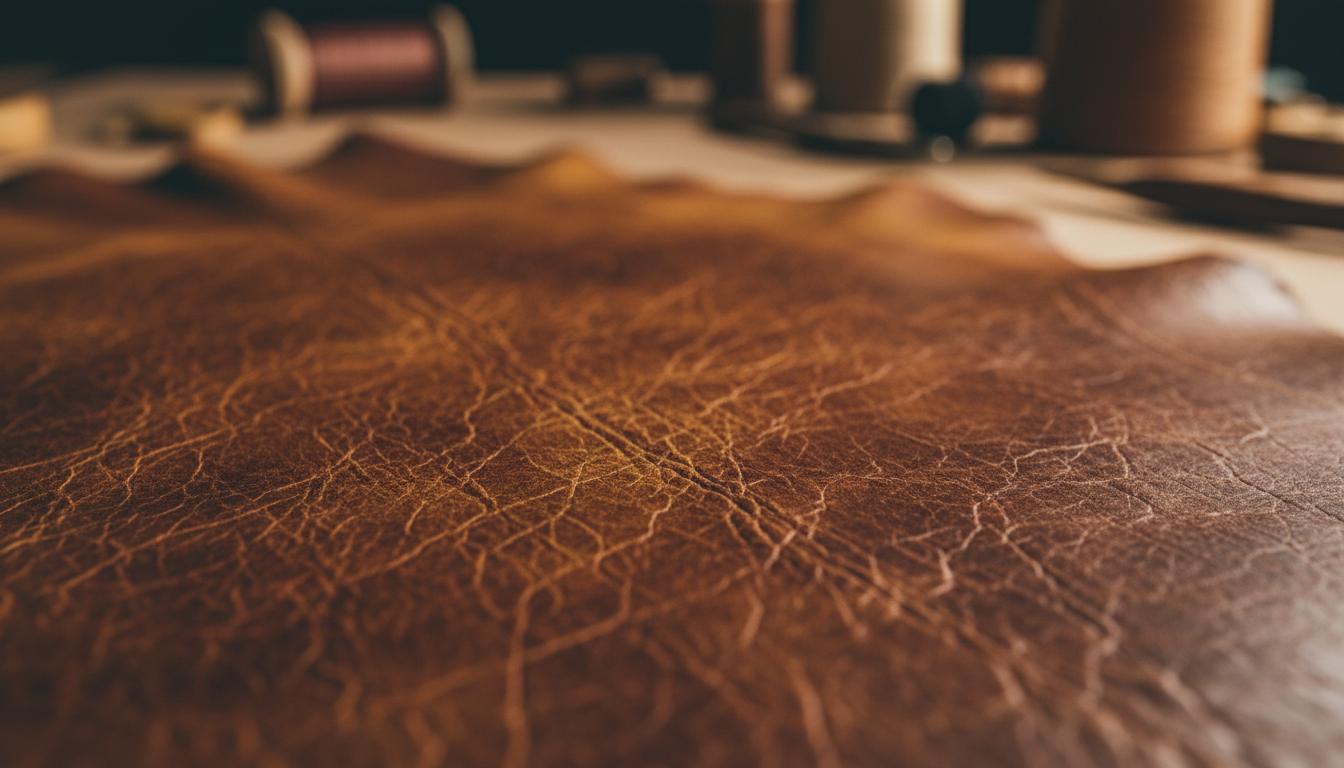
The question is what the maker needed the surface to do. A pigmented finish may be ideal for a family sofa that must resist staining. An aniline leather may reward careful ownership with depth and patina. A highly corrected leather may remain stable in colour while offering less visible natural variation. Quality resides in fitness and execution, not purity theatre.
Tannage changes behaviour, but not through a simple moral contest
Vegetable tanning uses plant-derived tannins and is often associated with firm structure, burnishable edges and visible ageing. Chrome tanning can create softness, colour range, heat resistance and consistency. Combination and other tannages adjust these properties further. None of these categories determines environmental performance or quality by itself.
Tanning is a controlled chemical process, and responsible evaluation belongs at facility level. The Leather Working Group’s manufacturer audit, for example, covers areas including operating permits, production data, incoming-material traceability, chemical management, water and waste. Certification has a defined scope and period; it does not mean every hide is traceable to a farm or that every social, animal-welfare and land-use question has been solved.
Chemistry also affects the finished article. European restrictions on chromium VI in leather articles reflect a real skin-sensitization concern, but a shopper cannot diagnose compliance by colour or smell. For objects sold into regulated markets, ask whether the manufacturer tests against the applicable chemical and product-safety requirements. “Vegetable tanned” should not be used as a substitute for evidence about the actual facility.
Finish determines the first years of ownership
Aniline, semi-aniline, pigmented, patent, waxed, oiled, pull-up, coated and embossed surfaces behave differently. Finish controls how quickly the leather absorbs moisture, shows scratches, transfers colour, develops patina and accepts repair products. Two leathers from the same species and tannage can feel and age entirely differently after finishing.
What matters is whether the colour is through-dyed or largely carried by the surface, whether a protective coating is present and what cleaners or conditioners are prohibited. A soft hand may come from careful milling, oils, waxes or a temporary surface treatment. A dramatic pull-up effect may be intentional; cloudy marks on a coated finish may not be. The seller should be able to describe expected ageing in ordinary language.
Scent is not a quality test. Fragrance can come from tanning, finishing, storage or added products, and a strong “leather smell” does not verify species, origin or grade. Judge the declared material and the object’s performance rather than allowing smell to perform the entire sale.
Thickness and temper must follow the load path
Leather quality is inseparable from where it is placed. Handles, strap anchors, flex points, toe bends, hinge areas and seat cushions experience different stresses. A maker may split or skive a fine leather to create elegant folds, then reinforce it internally. That can be excellent engineering. It can also create hidden dependence on low-quality board or adhesive.
Examine how weight travels through the object. Does a bag handle connect to a structural panel or only to surface stitching? Does a belt retain enough substance around the holes? Does a shoe flex behind the toe rather than collapsing at the joint? Are chair panels supported where the user’s body repeatedly loads them? The hide story becomes secondary when construction ignores force.
Determine whether thickness is measured in millimetres or ounces and whether different zones use different specifications. The precise number is less important than the maker’s ability to explain the choice. “Thick” is not synonymous with durable, and thin is not synonymous with cheap; fibre quality, temper and construction determine how the material behaves.
Construction can elevate or waste the leather
Look beyond the face to edge paint, folded edges, skiving, stitching, seam allowance, reinforcement, lining, hardware and adhesive. A beautifully tanned hide cannot rescue a zip that cannot be replaced or a handle attached without adequate support. Conversely, a modest, well-finished leather can become a dependable object through intelligent patterning and serviceable construction.
Edge paint should be judged for flexibility and repair, not only gloss at the counter. Raw or burnished edges require sufficient fibre structure and careful finishing. Linings should permit cleaning or replacement where wear is expected. Hardware plating, screw access and standardized components can matter more after five years than a prestige material name.
For shoes and garments, fit changes material performance. Leather forced to crease sharply or carry tension in the wrong place will age badly regardless of grade. Try the object with the weight, clothing or movement it will encounter in real use, and ask how much relaxation or stretching is expected.
Traceability claims have several depths
“Traceable leather” can mean traceable to a tannery, a trader, a slaughterhouse, a group of slaughterhouses or, in more developed systems, an individual farm. The Leather Working Group distinguishes physical, documented and group traceability in its own framework. Those levels should not be compressed into one reassuring word.
The central question is what the certificate or platform actually covers: the tannery, the trader, the batch or the finished product. Confirm the facility name and current certification status rather than accepting a logo in isolation. Traceability to a slaughterhouse is valuable information, but it does not automatically establish land-use history, animal husbandry or the full environmental profile of the hide.
Country names need the same discipline. Hide origin, slaughter, tanning, finishing and product manufacture may occur in different places. A shopper does not need a forensic supply-chain map for every wallet, but an expensive origin-led claim should be specific enough to verify.
Wildlife leather changes the purchase completely
Crocodilian, snake, lizard, ostrich and other unusual leathers require exact species identification and trade documentation where protected species or national restrictions apply. “Python,” “crocodile” or “exotic leather” may be too broad for travel. The scientific name, source, permit or tag information, invoice description and destination rules should be established before payment.
CITES regulates international trade in listed species through permits and certificates, while national law may be stricter. Legal sale inside one country does not establish that a traveller may export, transit with or import the item elsewhere. A reputable boutique cannot replace the destination authority’s answer.
This is one place where uncertainty should stop the purchase. A non-wildlife alternative, a documented domestic purchase or an object without regulated material may be the more intelligent expression of taste.
Buy the repair path with the hide
Before leaving the counter, understand rain, heat, colour transfer, conditioning, cleaning, storage and professional service. More conditioner is not more care: some modern finishes need little product, while oils can darken pale leather, soften structure or interfere with future refinishing. Use the maker’s instructions for the exact finish and test any product discreetly.
Determine what can be replaced. Handles, edge paint, zips, elastic, buckles, soles, heel lifts and linings have different service lives. A workshop that retains material references and accepts repairs may justify a premium even if the leather itself is not marketed through grand vocabulary.
The final record should let you state the species, leather form, tannage, finish, maker, manufacturing place, traceability level, construction logic, care restrictions and repair route. No single grade can carry that knowledge. Once those facts are visible, leather stops being a hierarchy of impressive words and becomes a material you can own intelligently.
A useful leather description is specific rather than flattering. Hide, cut, surface, tannage or finish, lining, edge, hardware, construction, care and repair should explain the object more clearly than any universal-sounding grade.