ORBIS buyer intelligence
How to Buy Textiles Without Guessing
A textile can conceal several geographies and many different kinds of work within one surface. Fibre, yarn, dye, weave or print, finishing, cutting and sewing may occur in separate places; buying well means learning which operation gives the cloth its defining character.
Softness is evidence of touch, not quality
Textiles persuade through the hand. A scarf feels soft, a coat feels heavy, a table linen feels crisp, a rug feels dense. Those sensations matter, but they are the result of several variables arriving at once: fibre, yarn, structure, finish, moisture, display treatment and age. The counter encourages the shopper to turn a first impression into a quality verdict before the cloth has been understood.
A very soft knit may pill quickly because of short fibres, loose twist or a brushed surface. A firm linen may become supple through use. A heavy cloth may contain dense fibre or simply a coating. Shine may come from silk filament, a satin structure, mercerization, calendaring or synthetic fibre. None of these is inherently good or bad; each changes the promise being made.
The useful approach separates the layers of information. First establish what the textile contains. Then ask how the fibre became yarn, how the yarn became structure, what happened to the surface, how the object was assembled and what care the whole sequence requires.
Read the legal label for what it says—and what it cannot
In the United States, the Federal Trade Commission’s Textile Fiber Rule requires many covered products to disclose generic fibre names and percentages by weight, the responsible manufacturer or marketer and the country where the product was processed or manufactured. European Union rules likewise require fibre-composition labelling for covered textile products and specify how mixed fibres are named. These are important consumer protections, not complete quality reports.
“One hundred per cent cotton” does not identify staple length, yarn count, twist, weave, finish, farming system or durability. “Made in” may identify the relevant legal manufacturing origin while leaving spinning, weaving and dyeing elsewhere. A fibre label can also apply to the textile component rather than buttons, leather trim, fillings or coatings, depending on the product and jurisdiction.
Read every label together: fibre content, origin, maker identity, care and certification. When the sales story contradicts the sewn label, pause. The permanent label is not infallible, but it is a more accountable statement than an improvised counter description.
Fibre prestige is a poor substitute for specification
Cotton, linen, wool, cashmere, silk, viscose, lyocell, polyester, nylon and blends can each produce excellent or disappointing textiles. Fibre type sets a range of possibilities; it does not determine the result. Length, fineness, strength, crimp, filament continuity, moisture behaviour and processing matter, as do the intended climate and use.
Blends should be judged by function rather than purity. A small percentage of synthetic fibre may improve recovery, abrasion resistance or drying; it may also complicate recycling and change feel. Linen blended with cotton can soften and reduce creasing while losing some of linen’s dry structure. Wool blended with nylon can become more durable in socks. The relevant question is why the fibres are together and whether the proportion supports that purpose.
Be wary when a prestigious fibre appears in a token percentage but dominates the marketing. Ask for the full composition and whether the named fibre is present in the face, pile, lining or filling. The object should be described by its material reality, not by the most glamorous ingredient.
Yarn determines more than most labels reveal
Fibres become useful through yarn. Staple length, carding or combing, twist, ply, filament structure and spinning method influence smoothness, strength, lustre, warmth and pilling. Two fabrics with identical fibre percentages can perform differently because one uses a compact, tightly twisted yarn and the other a lofty, lightly twisted one.
For knitwear, ask about gauge and ply only if the seller uses those terms meaningfully. A high gauge creates a finer knit but does not guarantee better fibre or stronger seams. More plies can add body without automatically adding quality. For woven cloth, yarn count and density can help compare similar fabrics, but they should not be converted into universal prestige scores across different structures.
The simplest evidence remains the cloth itself. Hold it to the light, observe recovery after gentle compression, examine the surface for loose fibre and compare tension near seams. This is not a home laboratory. It is a way to see whether the yarn and structure support the promised use.
Structure tells you how the textile will behave
Plain weave, twill, satin, jacquard, pile, knit, felt, lace, tufting and nonwoven construction distribute force differently. Twill can drape and resist visible soiling; satin creates a smooth face with floats that may snag; knit structures stretch through loops; pile can crush or shade; loosely woven cloth may breathe beautifully while requiring careful handling.
Ask the seller to name the structure, then connect it to the object. A travel trouser needs recovery and abrasion resistance. A curtain needs light behaviour and dimensional stability. A rug needs a foundation, pile attachment and edge construction suited to traffic. A shawl may prioritize drape and warmth over resistance to snagging.
Traditional names can describe structure, region, pattern or commercial style, and those meanings do not always align. “Brocade,” “damask,” “ikat,” “tweed” and “pashmina” should be explained rather than used as self-authenticating labels. The exact fibre, technique and place still matter.
Weight, density and opacity belong to use
Heavier is not automatically better. Cloth weight can signal warmth, drape, opacity or durability within a comparable category, but it can also make a garment uncomfortable in the intended climate. A fine but densely woven fabric may outperform a thicker, loose one. A lightweight silk may be exquisite for a scarf and unsuitable for a bag lining that carries abrasion.
When weight is available in grams per square metre or ounces per square yard, use it to compare like with like. For rugs, knot counts and pile density are frequently marketed as universal quality measures even though design, fibre, knot structure, finishing and condition also matter. A numerical metric is useful only when the objects share the same basic system.
Test opacity, drape and recovery in the conditions of use. Place a hand behind the cloth, move it, sit in the garment if appropriate and consider lining. The purchase should succeed in daylight, motion and climate—not only under the controlled light of the shop.
Dye, print and finish write the surface story
Colour can be introduced at fibre, yarn, fabric or garment stage. A pattern can be woven, resist-dyed, block-printed, screen-printed, digitally printed, embroidered or painted. The front may look similar while the reverse and ageing behaviour differ. Establish which process created the image and whether the colour penetrates the material or largely sits on the surface.
Finishes can transform hand and performance. Brushing, mercerization, calendaring, washing, resin treatment, water repellency, softeners, coatings and pre-shrinking may improve a textile for its intended use. They may also wear away, change care requirements or create a first-touch effect that does not survive laundering.
Colourfastness cannot be guaranteed by appearance. What matters is whether the exact product was tested for washing, rubbing, perspiration or light where those exposures matter. A decorative textile may be honestly unsuitable for laundering. The key is to learn that before it becomes a tablecloth, garment or sunlit curtain.
Handloom and hand-print claims need a process map
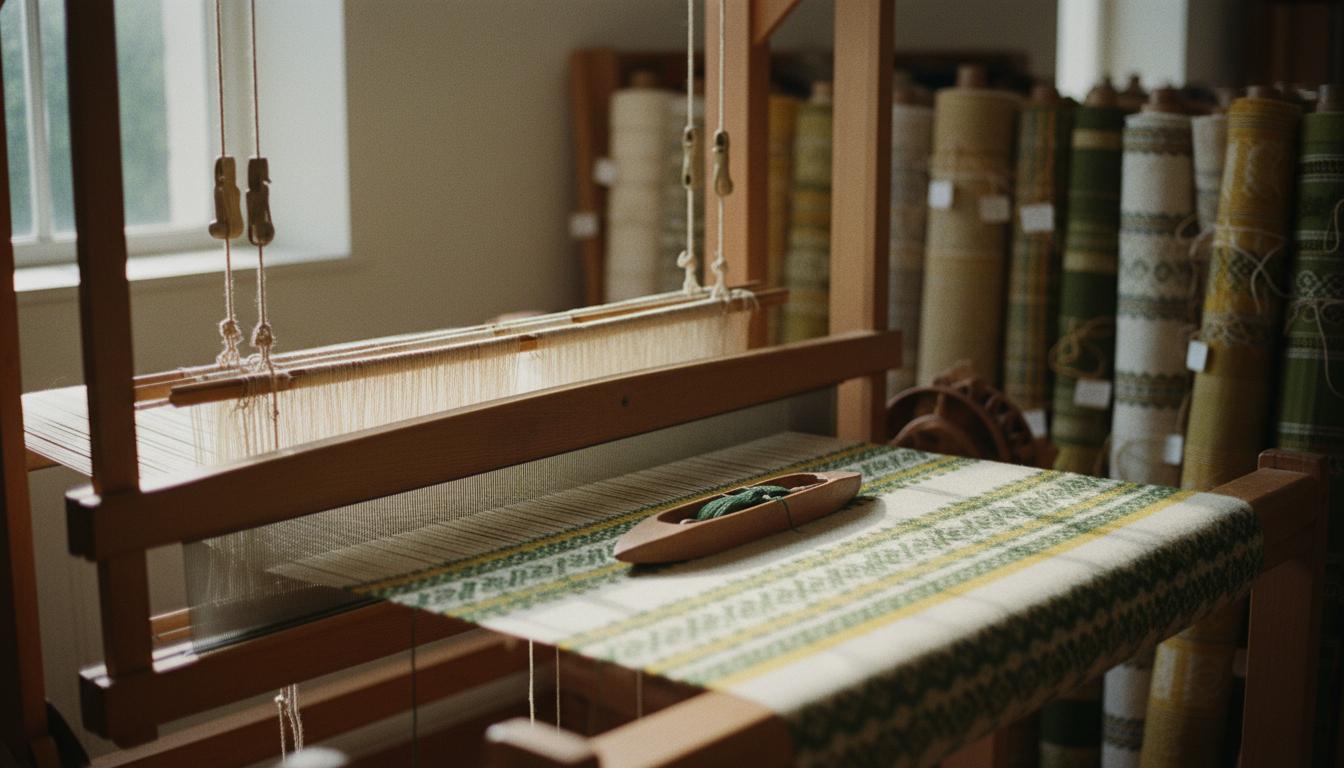
“Handwoven,” “handloom,” “hand-spun” and “hand block-printed” describe different stages. Cloth may be woven on a hand-operated loom from industrial yarn, then mechanically finished and cut in a separate facility. A block printer may apply a hand-carved design to power-loom fabric. These are not lesser objects; they are hybrid production systems that should be credited accurately.
Establish where the yarn came from, which loom or printing method was used, who performed the defining operation and where finishing and sewing occurred. A cooperative, workshop and brand may each play a role. The seller should not compress all participants into one anonymous “artisan” if the purchase depends on direct authorship or community benefit.
Visible irregularity is not proof. Registration shifts, slubs and selvedge variation may arise from the process, but they can also be simulated or reflect defects. Compare several examples and ask what variation the maker considers normal. A credible explanation is more valuable than a staged imperfection.
Certification must be read at product level
A standard can answer a specific question well while leaving others open. GOTS Version 8.0, released in 2026, covers certified organic natural fibre content together with processing, manufacturing, packaging, labelling, trading and distribution requirements for qualifying textiles. Its labelled goods must carry specified information including label grade, certification body and certified entity number. That scope is substantial, but the shopper must still confirm that the exact product carries a valid label rather than assuming a certified supplier makes every item to the standard.
Other schemes may focus on harmful substances, recycled content, forestry, animal welfare, social audits or facility management. A logo should lead to a standard name, certificate number, scope, current status and product claim. A company membership badge is not necessarily a product certification. A certified fibre is not necessarily a certified finished garment.
The most useful question is: what does this mark verify on this particular object, and what does it not verify? Certification should narrow uncertainty rather than produce a new halo.
Construction and care complete the textile
A fine cloth can be wasted by poor cutting, unstable seams, inadequate hems, weak lining or a pattern that ignores grain and stretch. Inspect seam allowance, matching, reinforcement, buttons, zips, lining attachment and access for alteration. For rugs and household textiles, examine backing, edge finishing, hanging systems and whether the object can be cleaned with the available local expertise.
Care instructions are part of the design. The FTC Care Labeling Rule in the United States requires covered garments to carry a reliable care method, but the buyer should still ask about shrinkage, colour transfer, moth risk, storage, ironing, steaming and repair. “Dry clean only” may reflect fibre, dye, structure, trim or the manufacturer’s tested method; do not improvise based only on fibre content.
Before purchase, you should be able to state the fibre percentages, yarn or relevant specification, structure, dye or print method, finish, manufacturing roles, care method, intended climate and repair path. A textile remains sensuous after it becomes intelligible. In fact, the knowledge often makes its beauty more precise.
The textile worth buying can be described from fibre to care without guesswork. Keep the maker, region, technique, material and maintenance record attached so that pattern never becomes a substitute for provenance.