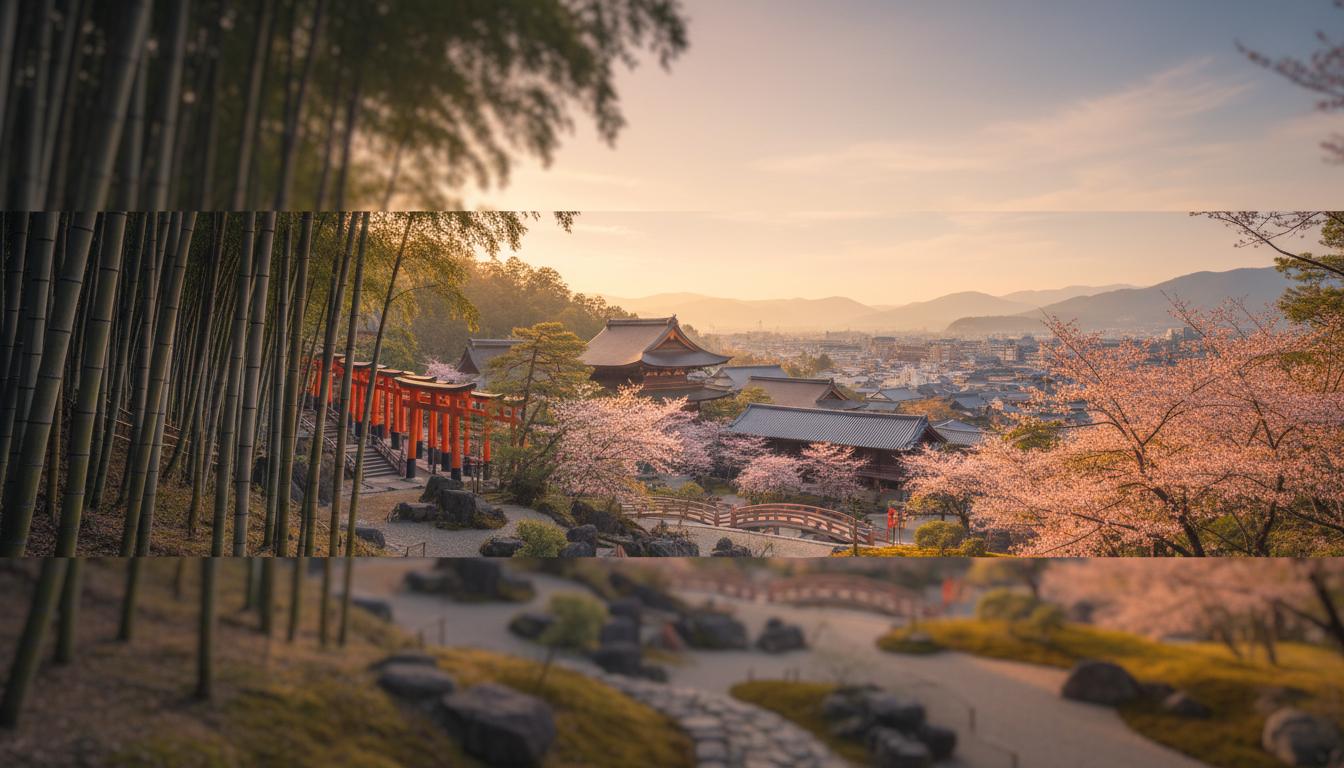
ORBIS city feature
Kyoto — Perfection Is a Verb
Kyoto’s perfection is often described as a visual state, yet its real form is repeated action. The object is made, used, cleaned, repaired, replaced and taught again; refinement survives because practice continues.
The shops tell another story. Perfection here is a verb.
It is the fan opened once more to feel whether the ribs move cleanly. The tea weighed again because humidity, leaf and water have changed. The incense blended for a present room rather than an imaginary court. The textile pattern reinterpreted because repetition without attention becomes merely repetition.
Shoyeido makes this clear through ordinary use. A house founded in 1705 could rely on age as its product. Instead, the useful counter conversation begins with a room. How large? How often? How much smoke? Daily living, meditation, offering, gift, fragrant wood study—each purpose changes the correct format. The centuries matter because they have produced distinctions, not because they suspend judgement.
Ippodo Tea performs the same work with water and leaf. The Kyoto main store now joins retail, tearoom, takeaway and events. The old house has been renewed to make tea usable in the present. A customer can taste, ask, prepare and discover that the most prestigious tea may be the wrong tea for an ordinary morning.
This is a form of humility. The house does not ask the customer to rise to the legend before entering. It translates the legend into temperature, grams, seconds and appetite. Perfection becomes repeatable enough to live with.
The city’s tourism often prefers a visible flaw. Rough ceramic surface, uneven paper edge, brushstroke, weathered wood. The flaw is sold as proof of handwork because it photographs more easily than process. Kyoto’s serious shops resist that shortcut. Irregularity can be deliberate, incidental, imitated or simply poor. The maker, material, production place and technique remain stronger evidence.
Morita Washi returns paper to purpose. Writing, printmaking, conservation, binding and wrapping require different fibres, surfaces and weights. “Washi” is not one noble substance. It is a field of solutions. The buyer who arrives with a project is closer to the craft than the buyer who arrives searching for a picturesque imperfection.
Miyawaki Baisenan returns the fan to motion. The object may carry painting, poetry, season and ceremony, but it first opens, balances and closes. A fan can look refined while feeling clumsy in the hand. Perfection is the repeated adjustment that lets ornament and mechanism agree.
Textiles reveal the cost of this agreement. Chiso, founded in Kyoto in 1555, now uses a current flagship and gallery to place kimono history beside contemporary artistic work. The institution does not need to pretend that the past remains unchanged. Its authority comes from making the conversation continue.
Tatsumura Textile offers another version: historical patterns and textiles studied deeply enough to generate new work. Restoration and invention are not opposites. Both require the maker to understand what must be preserved and what can move.
This is why lineage is so easy to misuse in Kyoto. A date can make every current object appear equally authoritative. It can also make the customer reluctant to ask ordinary questions. Where was this made? Which part is done by hand? Who is the maker? How should it be cleaned? Is it intended for use or display? Can it be repaired?
A living house should welcome those questions. They are how lineage proves it has reached the present.
Kaikado makes the present tactile through the tea caddy. The lid’s slow descent, the fit of metal, the surface that changes with touch—these qualities are produced by precision and then completed by use. Patina is not a preinstalled heritage effect. It is the record of the owner’s repetition.
Aritsugu brings the verb into the kitchen. A knife must cut, sharpen, react to moisture and match a hand. Kyoto history cannot exempt the blade from maintenance. The user enters the craft every time the edge is cared for or neglected.
Confectionery makes the verb seasonal. Wagashi appears for a blossom, festival, moon, heat or first cold, then disappears. Its perfection cannot be stockpiled. The visitor who eats it in Kyoto accepts that not every beautiful object needs to survive the flight.
That may be the city’s hardest lesson for shopping. The noun encourages possession. The verb allows participation.
A tearoom visit, gallery, incense conversation or paper lesson can be complete without a large purchase. The knowledge may redirect the buyer toward a modest daily object: tea that will actually be brewed, incense that suits the home, a fan that moves beautifully, a few sheets of paper for work already imagined.
Kyoto’s routes should reflect this discipline. The central specialists can form one category day. Gion and Higashiyama require another rhythm. Textile and ceramic appointments deserve their own block. The city’s crowded buses and visitor flows make overplanning not only unpleasant but editorially false.
The serious traveller therefore repeats selectively. Return to the tea after tasting. Return to the textile after sleep. Open the fan again. Read the care instructions. Let the maker’s explanation survive the shop.
Perfection is not the flawless object waiting at the end of history. It is attention renewed before the next attempt. Kyoto’s best houses have continued because somebody kept performing the verb.
The most faithful purchase is the one that invites the buyer to continue it too.
Perfection remains alive only as a verb. Kyoto’s best purchase asks the owner to participate through use and care rather than admire a finished ideal from a distance.