The Island of Fire
In 1291 Venice ordered its glassmakers off the main islands — officially to keep the furnaces from burning the city down, unofficially to keep the trade's secrets on an island the Republic could watch. The exile became an aristocracy. Murano's masters were granted privileges ordinary citizens never saw, forbidden to leave, and left to spend seven centuries perfecting a single material. The furnaces are still lit, and four houses show the range of what that much accumulated time produces.
Barovier & Toso is the deep past made corporate: the Barovier family has worked glass on Murano since the thirteenth century, which places the firm among the oldest family businesses on earth. Its chandeliers — descendants of the Venetian ciocca — hang in palaces and hotel lobbies worldwide, and the house archive is effectively a museum of the medium. Seguso runs it close: the family counts its generations of glassmakers into the twenties, an unbroken chain of hands.
Venini is the island's twentieth century. Founded in 1921, it did what heritage houses rarely dare — invited outside artists and architects to design for the furnace — and the collaborations (Scarpa, Bianconi, and generations since) turned Murano glass from decoration into modern art. Venini pieces sit in museum collections and auction catalogues; the handkerchief vase alone is a design-history staple. And NasonMoretti, family-run since 1923, made the case for glass you actually use: tableware in saturated colors, goblets and tumblers that bring the furnace to the dinner table without asking for a vitrine.
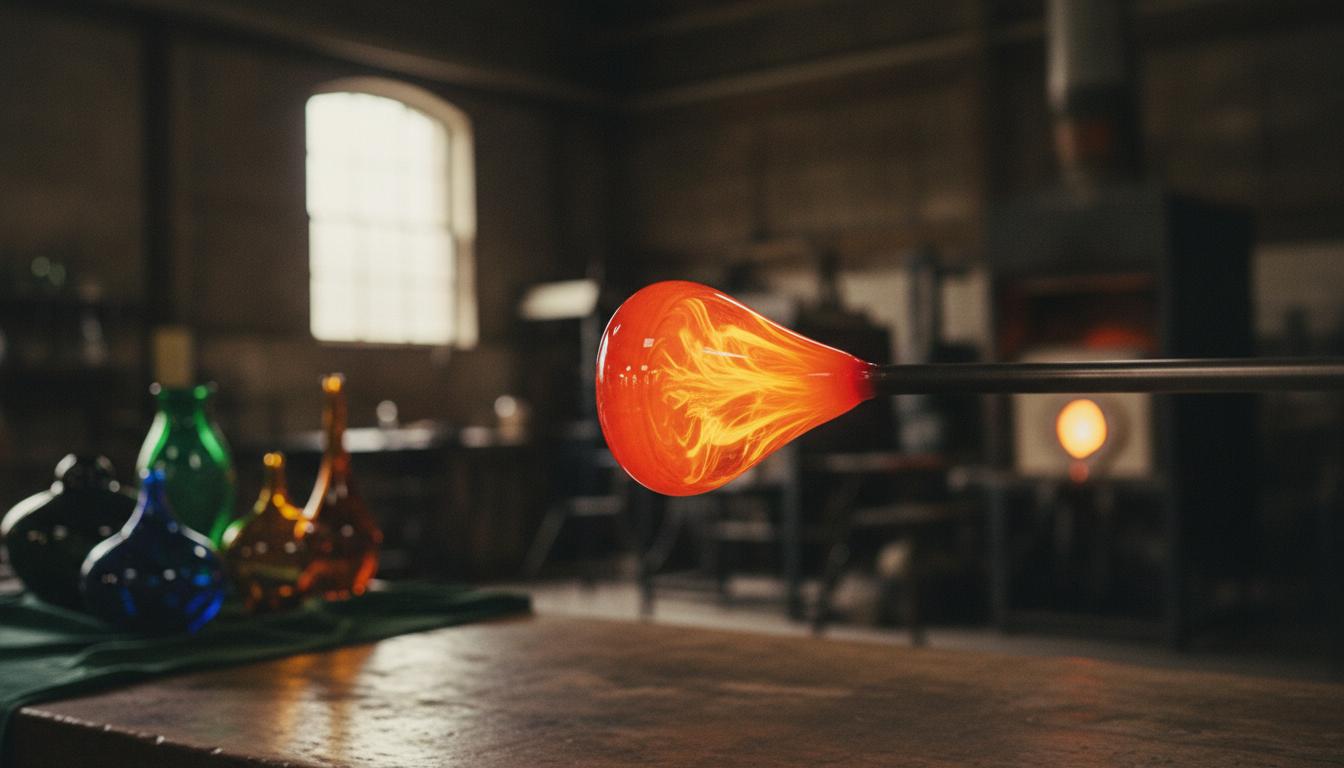
The visit matters because the process is the product. Watching a maestro gather molten glass and coax it — no molds for the great pieces, just breath, iron, and inherited timing — recalibrates what the prices mean. Buy from the houses themselves or their appointed rooms; the island is ringed with tourist glass from elsewhere, and the whole point of Murano is that here, provenance is the craft. A single signed goblet carries seven hundred years of an island that was never allowed to do anything else.
Article references
The houses in this story
- Barovier & Toso Murano / Venice / Online
Murano glass dynasty since 1295 — handcrafted blown-glass chandeliers and lighting by master artisans using traditional techniques. store page → · open in the atlas → - Venini Murano / Venice / Online
Murano's modernist furnace since 1921 — Fazzoletto vases and glass signed by century-defining designers. Official site still sells the Fazzoletto as a house icon credited to Fulvio Bianconi and Paolo Venini; the Murano boutique is on the same fondamenta as the furnace. store page → · open in the atlas → - Seguso Murano / Venice / Online
Seguso represents twenty-three generations of Murano glassmaking carried by one family. Its glass is blown on Murano itself, continuing a dynastic craft tradition passed down within the same family line. store page → · open in the atlas → - NasonMoretti Murano / Venice / Online
Murano glassmaker founded in 1923, producing colored drinking glasses and tableware that bring Venetian glassmaking into contemporary dining and hospitality settings. store page → · open in the atlas →