Time, Kept
The mechanical wristwatch should not exist. A phone keeps better time; a decent quartz movement costs less than lunch. And yet the industry that logic condemned is larger and more obsessed-over than ever — because somewhere in the last century the watch stopped being an instrument and became the last piece of machinery most people will ever wear. Three houses explain the survival.
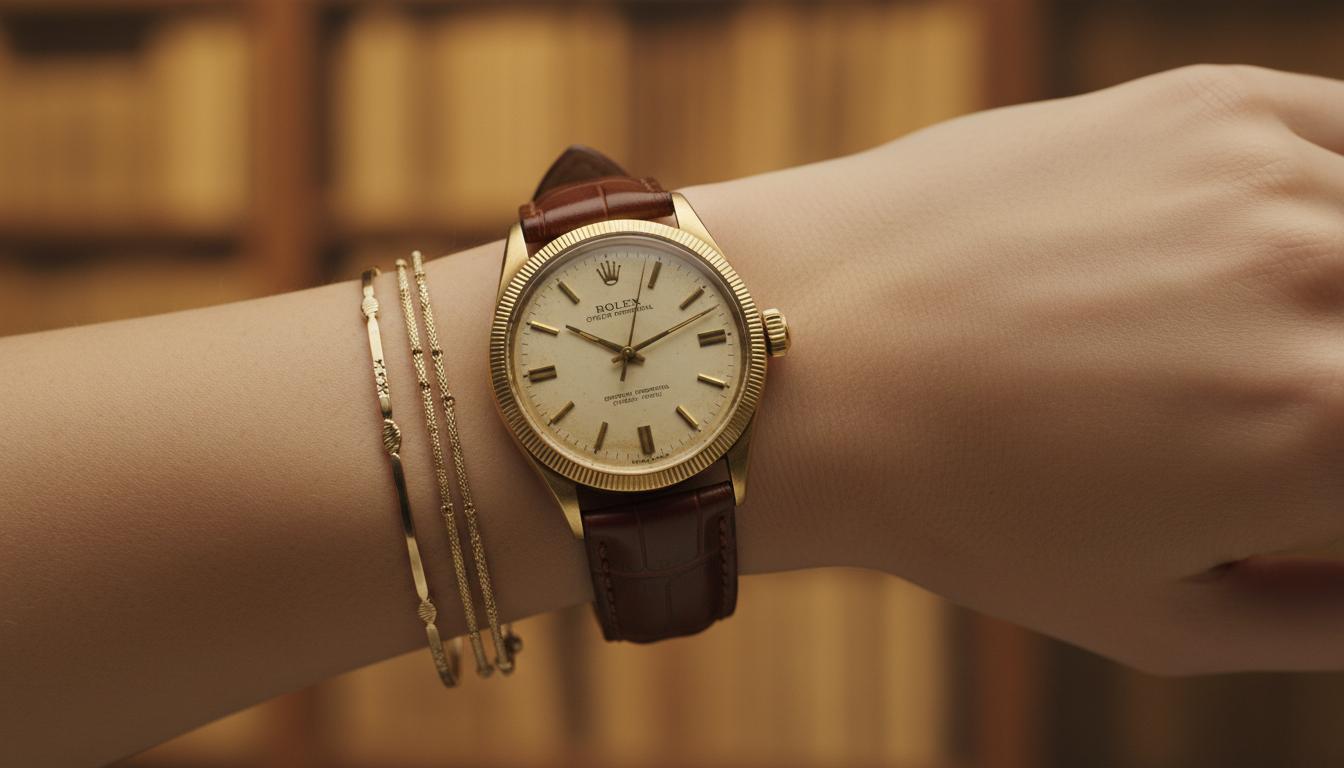
Rolex explains it through invention. Hans Wilsdorf's firm, Geneva-seated and foundation-owned, built the modern watch piece by piece: the Oyster of 1926, the first waterproof case, proven on a swimmer crossing the Channel; the self-winding Perpetual rotor of 1931; and from 1953 the tool-watch canon — Submariner for divers, GMT-Master for airline pilots, Explorer for Everest — that turned instruments into archetypes. The waiting lists on steel sports models are not marketing; they are the visible edge of demand for objects whose designs have barely needed changing in seventy years.
Cartier explains it through form. The Tank of 1917 — a rectangle inspired by the treads of the machines then crossing the Western Front — may be the most enduring single design in watchmaking: on wrists continuously for over a century, unchanged in essentials, equally correct on any arm in any decade. The Santos, made for the aviator Alberto Santos-Dumont so he could read the time without releasing the controls, is among the first purpose-built wristwatches ever made. Cartier proved a watch could be jewelry and history at once.
Montblanc explains it through patience. The Hamburg house spent a century perfecting the Meisterstück fountain pen — the 149 has signed treaties since 1924 — and then extended the same finishing culture into serious watchmaking through its Minerva manufacture in Villeret, a workshop with its own unbroken chronograph lineage. The lesson: in the crafts of permanence, competence transfers.
Buy against fashion, not with it. A Tank, a Datejust, an Oyster Perpetual — the designs that have already survived every trend are the ones that will survive the next. The watch's argument was never accuracy. It was that some machines deserve to outlive their owners, ticking.
Article references
The houses in this story
- Rolex Geneva / Switzerland / Online
The crown — Swiss watchmaking icon since 1905. Daytona, Submariner, GMT-Master, and the most recognized luxury brand on earth. Status, precision, and timeless design. store page → · open in the atlas → - Cartier Paris / Online
Paris jeweler founded in 1847 by Louis-François Cartier; earned a royal warrant in 1856 and the title 'jeweler of kings'; introduced the Santos watch (1904), the Tank (1917), the panther motif (1914), and the Love bracelet (1969). store page → · open in the atlas → - Montblanc Via De' Tornabuoni, Florence / Online
Montblanc began in Hamburg in 1906 as the Simplo Filler Pen Company and introduced its Meisterstück pen in 1924, its nib stamped 4810 for Mont Blanc's height in metres. Since 2006 it has also run a Swiss watchmaking manufacture in Villeret, built on the acquired Minerva atelier. store page → · open in the atlas →