White Gold
For two centuries Europe imported Chinese porcelain at ruinous cost and could not make it — the recipe for true hard-paste was the industrial secret of the age, and kings called it white gold without exaggerating the accounting. Then, in 1708, in Dresden, the alchemist Böttger — originally imprisoned to make actual gold — cracked kaolin's code instead, and in 1710 Augustus the Strong founded the Meissen manufactory to exploit it. Europe's porcelain age began as a state secret with armed guards.
Meissen remains the ancestor. The crossed-swords mark, applied since 1722, is among the oldest trademarks in continuous use; the manufactory still paints and gilds by hand outside Dresden, and its figurines, Zwiebelmuster blue onion pattern, and monumental commissions span three centuries of European taste. Owning Meissen is owning the moment Europe caught up with China.
The secret leaked, as secrets do, and courts raced to build rivals. Vienna's manufactory came second, in 1718 — its successor Augarten still produces in the Augarten palace park, hand-painting the airy Viennese patterns that dressed imperial tables. In Tuscany, the Marchese Ginori founded his works at Doccia in 1735; today's Ginori 1735 carries that lineage into contemporary collaborations while still producing the stemmed vases and painted services that made Italian porcelain a dialect of its own. And in Hungary, Herend — founded 1826 — conquered late and completely: when Queen Victoria ordered a butterfly-and-floral service at the 1851 Great Exhibition, the pattern took her name and the house took Europe.
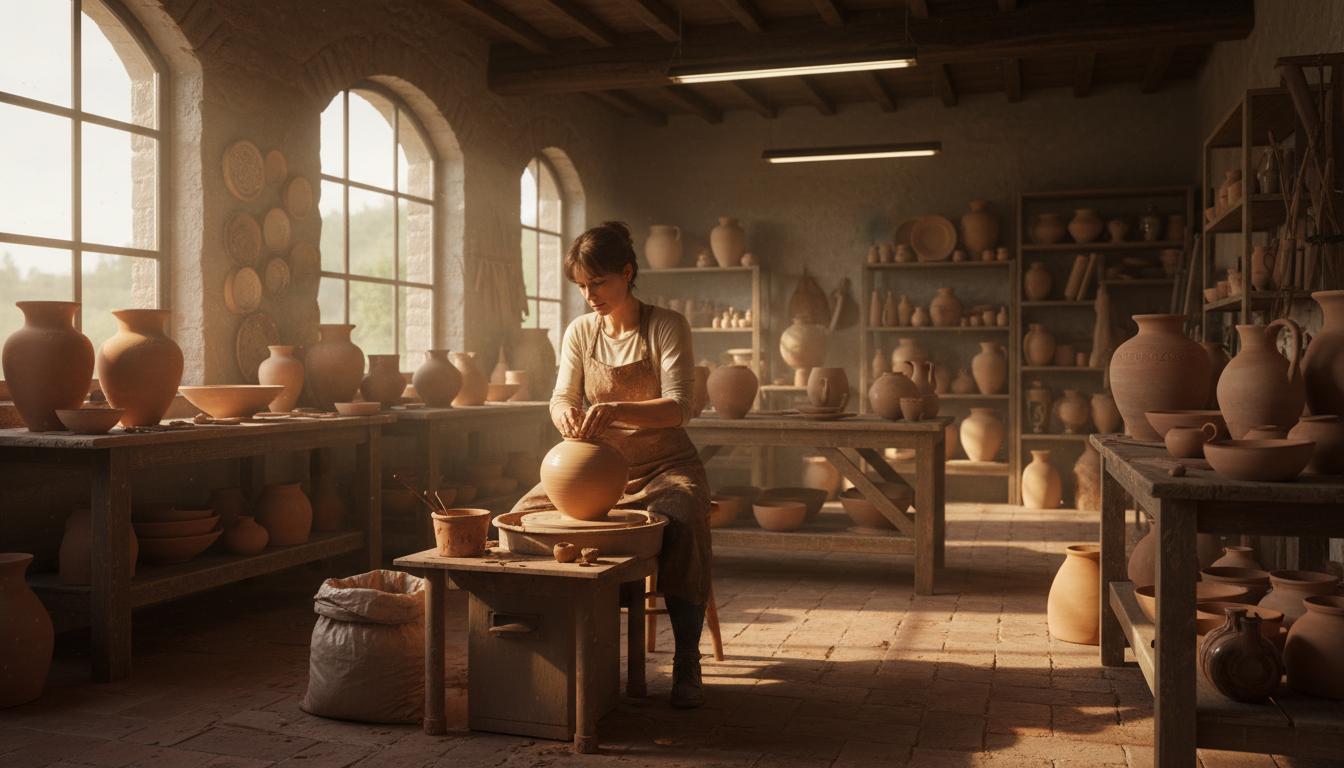
What unites the four is the survival of hand-painting at industrial addresses — every serious piece still passes under a brush, and the painter's mark matters. Buy one cup from one court: turn it over, find the mark that has meant the same thing for centuries, and drink from the object that once obsessed kings. The white gold rush never ended; it just became available.
Article references
The houses in this story
- Meissen Porcelain Meissen / Germany / Online
Europe's first porcelain manufactory, founded in 1710 in Meissen after Johann Friedrich Böttger cracked the formula for hard-paste porcelain, still hand-paints its tableware, figurines, and art objects on-site in Saxony. Its crossed-swords mark, adopted in the 1720s, is among the world's longest continuously used trademark for porcelain. store page → · open in the atlas → - Ginori 1735 Sesto Fiorentino / Tuscany / Online
The Doccia porcelain manufactory — Tuscan porcelain art since 1735, from Oriente Italiano to Luke Edward Hall. The Florence shop has occupied the ground floor of Palazzo Ginori on Via dei Rondinelli since 1802. store page → · open in the atlas → - Herend Lipótváros, Budapest
The Budapest shop of the Hungarian porcelain manufactory, selling hand-painted tableware and decorative porcelain made in Herend. Established 1826. store page → · open in the atlas → - Augarten Spiegelgasse 3, Vienna / Online
Porcelain since 1718 — Europe’s second-oldest manufactory, still painting by hand in a baroque palace; the Wiener Rose pattern outlived the empire that ordered it. store page → · open in the atlas →