ORBIS city feature
Zurich: The Edge of the Guarantee
Zurich’s visual language of confidence can make uncertainty feel almost impolite. The sophisticated buyer reads the guarantee, standard or certification carefully—and then studies the edge where the document stops and ownership begins.
The type is aligned. The timetable is legible. The object appears to have passed through enough systems that uncertainty begins to feel almost impolite. This makes the city a compelling place to shop and a dangerous place to stop asking questions.
A guarantee is powerful because it creates a boundary. The sophisticated buyer reads what lies inside it—and then studies the edge.
The law is a floor, not a biography
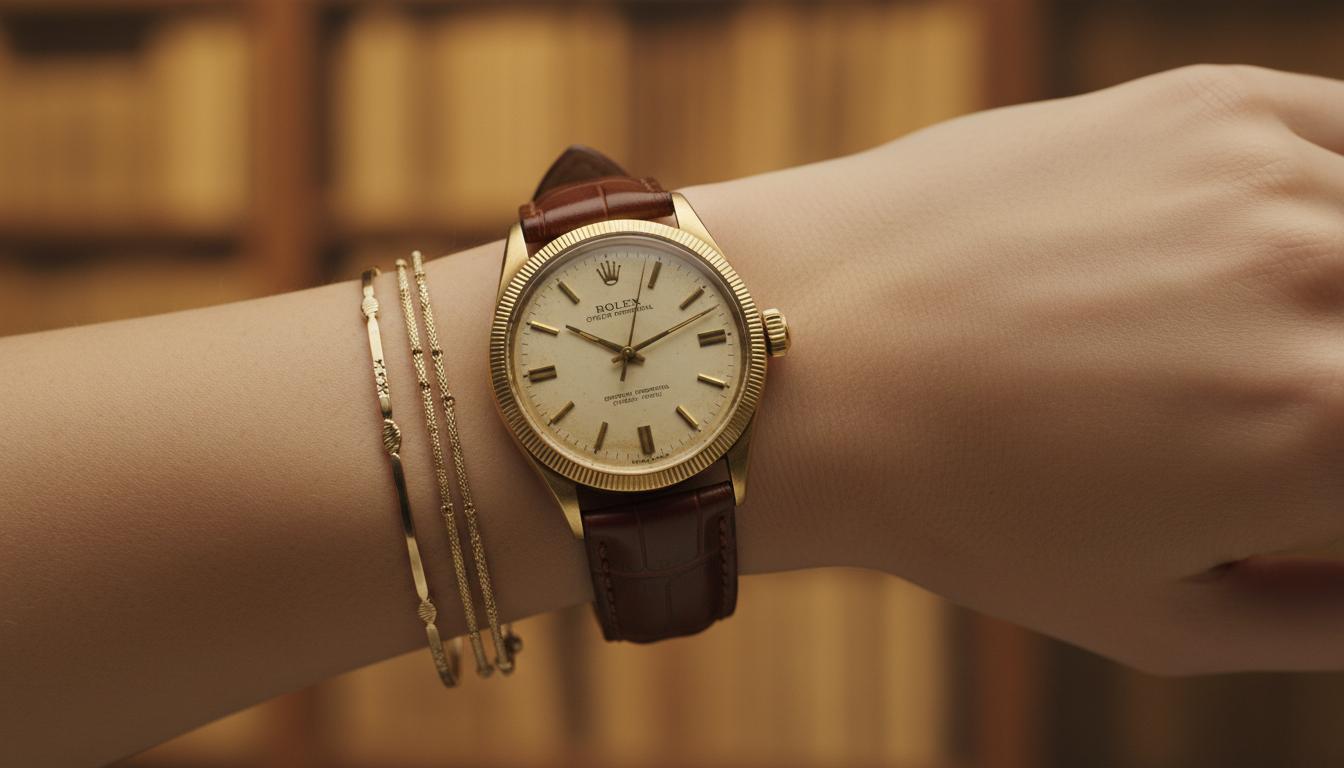
In watches, the phrase is governed by law. The Swiss Federal Institute of Intellectual Property explains that at least sixty per cent of the manufacturing costs of a complete watch must be generated in Switzerland, with additional criteria governing the movement and technical development.
That is not empty branding. It is a defined standard.
It is also not the complete biography of a watch.
The label does not tell the buyer where every component originated, whether the movement is exclusive, what was replaced during service, how aggressively the case was polished, or whether the future maintenance network suits the owner’s location. A bounded standard becomes most useful when the buyer understands both sides of the boundary.
Zurich’s watch salons can answer some of those questions, provided the service conversation receives as much attention as the dial.
The system may be stronger than the object
Zurich is excellent at institutional trust: certification, authorised retail, warranty, repair, tax forms, punctual delivery. Yet the existence of a strong system can cause the buyer to stop inspecting the individual item.
At Freitag, every truck-tarp bag is visibly singular. The brand’s repair infrastructure strengthens the purchase, but it does not choose the exact tarp section; seam placement, abrasion, closure and fit remain personal judgments.
At Confiserie Sprüngli Paradeplatz, company history can reassure the buyer while shelf life remains brutally present. Luxemburgerli currently carry a six-day stated life. The oldest story in the room does not make the freshest product immortal.
At Schwarzenbach Coffee & Tea, five generations of family ownership do not remove the need to ask when coffee was roasted or how quickly it should be used. Heritage belongs to the merchant. Freshness belongs to the purchase.
Sustainability also has a boundary
QWSTION’s Bananatex story is strongest where it becomes specific: abacá fibre grown in the Philippines, development in Zurich, production across Asia and repair coordinated through the brand’s service system. The product does not need a false claim of total Swiss manufacture. Its value lies in the transparency of the chain.
A sustainability statement should therefore be read as a set of bounded propositions. Which material is renewable? Which component is biodegradable? Where is it made? How long is it expected to last? What happens when it fails?
The edge of the guarantee is where the buyer discovers whether the claim can survive ordinary use.
Museums reveal the process behind the label
Zurich’s Museum für Gestaltung offers a wider design education through typography, posters, textiles, product design and craft. It places celebrated designers beside anonymous mass-produced objects and asks the visitor to look at systems of making, use and communication.
That is the right preparation for the shop floor.
Is the exact object a prototype, original production, authorised reissue, current mass-market version or decorative imitation? What decision did the designer make? Which constraint shaped the result? What has the retailer added beyond access?
The answers are rarely as compact as the logo.
Precision leaves uncertainty visible
Zurich’s retail culture is persuasive because it often provides better systems than other cities: clearer service, stronger documentation, serious merchants, durable products and well-defined standards.
The mistake is to treat those strengths as permission to stop thinking.
The guarantee should not end the inquiry. It should make the next question more precise.
That is Zurich’s real shopping intelligence: confidence with an edge left visible.