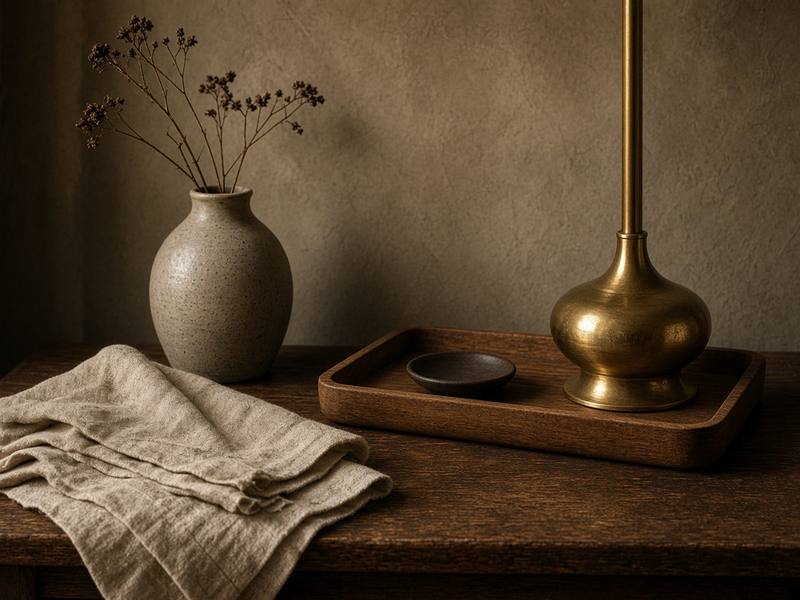
ORBISHOME & DESIGN IN PARIS 31 shops in the atlas.Illustration
Home & Design in Paris
31 stores · curated ORBIS register
ADAM (Paris, Montparnasse) developed from a Montparnasse hardware shop into an art-materials business, responding to the studios around it. Anthropologie offers homeware alongside womenswear through its BHV Marais presence, bringing the American lifestyle retailer into this selection. Bath Bazaar adds linen and home objects through Galeries Lafayette, with textiles and tableware among its household categories.
ADAM opened in Montparnasse in 1898, beginning as a general hardware and drugstore trade before the artist studios clustering around it pulled the business toward fine-art materials — a shift the shop's own history describes as driven by its neighbors rather than a founding plan.
Best for The Montparnasse color merchant that formulated the fixative behind International Klein Blue
ADAM opened in Montparnasse in 1898, beginning as a general hardware and drugstore trade before the artist studios clustering around it pulled the business toward fine-art materials — a shift the shop's own history describes as driven by its neighbors rather than a founding plan. The turn toward artists went further under Édouard Adam, the founder's grandson, who broke with the era's convention of keeping supplies behind a counter and let customers handle products directly, and who built out a dedicated fine-arts department.
The shop's best-documented distinction is a single formula: Édouard Adam developed the fixative medium that let his friend Yves Klein achieve the ultramarine now known as International Klein Blue, the pigment behind Klein's IKB paintings. ADAM's own account also credits the shop with custom products supplied to Alexander Calder, Jean Tinguely, Niki de Saint Phalle, Jean Dubuffet, Pierre Soulages and César — a run of mid-century artists whose signature materials the shop had a direct hand in.
ADAM now trades from 11 Boulevard Edgar Quinet in the 14th arrondissement as part of the Ets. Lavrut group, more than 120 years after it first opened as a Montparnasse hardware store. It remains a working art-supply retailer rather than a preserved storefront, still selling to the working artists whose studios first pulled it into the trade.
La Redoute’s upscale home line — Parisian apartment furniture and decor with editorial polish at catalogue prices. Stocked at Galeries Lafayette in Paris.
Best for Parisian apartment furniture and decor at catalogue prices
Anne de Solène makes bed linens in long-staple cotton, percale and sateen, with embroidery and coordinated patterns. Thread feel, weave and care requirements are easier to judge in person than online.
Best for Long-staple cotton and embroidered percale bed linens from a heritage house
Atelier Choux applies illustrated prints to swaddles, bibs, clothing and nursery décor. Coordinated patterns make it easy to assemble a newborn gift across textiles and keepsake objects without relying on generic babywear.
Best for Illustrated swaddles, bibs, and elegant Paris newborn gifts
Paris home-furnishings house founded 1995 by Françoise Dorget, mixing bohemian-modern furniture and lighting with handcrafted textiles and tableware. Original shop on rue Pavée in the Marais; later flagship in Saint-Germain-des-Prés.
Best for Bohemian-chic sofas and textiles for room-making
Caravane was founded in 1995 by Françoise Dorget, built around a bohemian-modern take on furniture, lighting and textiles rather than a single national design tradition. Its first shop opened on rue Pavée in the Marais, inside a courtyard space topped by a glass canopy that lets daylight reach the shop floor - an architectural detail the brand has continued to describe as central to how the space feels. From that base, Caravane expanded into multiple Paris addresses, including a shop near Bastille and a later flagship, La Maison Caravane, in Saint-Germain-des-Prés, alongside a presence inside Le Bon Marché Rive Gauche, the Left Bank department store. The brand's range covers upholstered sofas and armchairs, rugs, cushions, table linens and other textiles, and decorative tableware, generally mixing handcraft techniques and materials from different regions rather than presenting a single-country aesthetic. Véronique has led the company since 2011, with her daughter Capucine now also involved in the business, continuing the founder's direction rather than repositioning the brand. Over close to three decades, Caravane has become a reference name in Paris for a layered, travel-influenced approach to home decorating, distinct from both minimalist Scandinavian design and traditional French antique-led interiors.
Guy Degrenne took over his father's forge in Sourdeval, Normandy in 1948 to make stainless steel cutlery, reportedly recovering steel from abandoned Battle of Normandy tank armor; a second plant followed in Vire in 1967, and the house remains a major French tableware maker.
Best for Stainless flatware and porcelain table settings from a Norman house since 1948
Degrenne's founding in 1948 centers on Guy Degrenne taking over his father's forge in Sourdeval, in the Manche department of Normandy, with the goal of making stainless steel cutlery accessible to ordinary households rather than a luxury reserved for the wealthy. The business began small, with around seven workers, but grew quickly on the back of an unusual sourcing story: the company is described as having recovered stainless steel from tank armor abandoned in the region after the Battle of Normandy, repurposing wartime material into everyday flatware. As the business industrialized, Guy Degrenne built a new production site in Vire, in Calvados, in 1967, and the company went on to become a leading name in French arts de la table. Degrenne's current production is based across sites in Vire and Limoges.
Paris studio founded in 2000 by Tehran-born India Mahdavi after seven years as artistic director for Christian Liaigre; her all-pink Gallery at Sketch (London, 2014) helped popularize the 'Millennial Pink' palette.
Best for The designer's furniture, color, and collectible ceramics in her Paris universe
India Mahdavi was born in Tehran to an Iranian father and an Egyptian-English mother, and trained in architecture along with industrial, graphic and furniture design. She began her career as artistic director for French designer Christian Liaigre, working with him for seven years before founding her own studio in Paris in 2000, followed shortly after by a showroom and a homeware shop. Her hospitality projects include On Rivington in New York, Le Germain and Café Français in Paris, Apogée Courchevel, the Monte-Carlo Bay Hotel in Monaco, and the Connaught-Coburg bar in London. Her best-known work is The Gallery at Sketch, a London restaurant she designed in 2014 saturated in a single shade of pink, widely reported as one of the most-photographed restaurants in the world on social media; the project is credited with helping popularize the shade later nicknamed 'Millennial Pink.' She has also designed Ladurée locations in Los Angeles, Tokyo and Geneva, each styled around a pastel palette referencing Marie Antoinette. Her Paris studio, showroom and small-objects space are grouped along rue Las Cases in the 7th arrondissement.
Paris design studio and shop founded by Pauline Vincent, curating playful glassware, tableware, and colorful objects celebrating everyday beauty and seasonal aesthetics.
Best for Small-batch Paris-edition furniture, lighting, and colorful design objects
La Romaine Editions was founded by Pauline Vincent as a design studio dedicated to discovering simple, unexpected beauty in everyday objects. Based between Paris and Provence, the brand creates exquisite ceramics, blown glass, and tableware in playful forms and distinctive color combinations. The studio operates a physical retail location at 40 Rue de Varenne, 75007 Paris, which serves as the creative center for the project. The shop features curated monthly displays of carefully selected objects including knife rests, selected furniture, designer candlesticks, vases, ceramics, and glass pieces. In addition to permanent stock, La Romaine Editions changes thematic selections several times yearly to celebrate specific colors, moods, or seasons. The brand accepts custom orders including standing tables and made-to-measure pieces for both individual and professional clients. La Romaine Editions represents a contemporary French design practice focused on celebrating the poetic and functional qualities of objects for daily use.
Founded in Paris in 2007 by glassblower Sébastien Nobile and Valentina Nobile; the pair sold their first four recycled-glass vases by bicycle to Paris florists in 2009, and proceeds still fund glassblowing artisans.
Best for Hand-blown recycled glass tableware, vases, and objects
La Soufflerie began as a nonprofit glassblowing association that Sébastien and Valentina Nobile founded in Paris in 2007, after concluding that mouth-blown glassmaking was dying out in the city. Sébastien was one of the few working glassblowers left in Paris; Valentina, then a painter and photographer, had approached him about renting studio space, and the two later spent their honeymoon traveling by camper to ancient glassblowing sites in Jordan and Syria. On their return, in 2009, they made four vases from recycled glass and sold them by bicycle to Paris florists — the sale that effectively launched the business. That same year, both of the glassblowing teachers Sébastien had studied under died, and the region's only glassblowing class closed, leaving La Soufflerie among the last active links to the craft in Paris. The company still uses recycled glass sourced from wine and beer bottles, perfume bottles, and window panes, melted by hand in a furnace and shaped by mouth rather than machine, so each finished piece — vases, tableware, glasses — carries visible pontil marks and slight variation as a mark of handwork. It runs a boutique in the Latin Quarter at 7 rue de l'Odéon and reinvests proceeds into supporting glassblowers.
Paris homeware shop founded 2013 by Elsa Coustals, Lino Landau and Denis Geffrault in a former public treasury building at 8 rue du Chateau d'Eau, Canal Saint-Martin. Curates French and European kitchenware, stationery and design objects.
Best for Kitchen, table, linen, and tool essentials for everyday design
La Tresorerie opened in 2013, founded by Elsa Coustals, Lino Landau and Denis Geffrault in the Canal Saint-Martin neighbourhood of Paris's 10th arrondissement. The shop takes its name from the building it occupies - a former public treasury office at 8 rue du Chateau d'Eau - and its roughly 3,200-square-foot space is stocked with French and European homeware, stationery and design objects. The selection leans toward useful, functional, well-made items with a Scandinavian influence. The concept expanded in 2019 with a second location called Suite, focused on furniture and lighting, and again in 2020 with Au Bain, a line of organic beauty products.
Lexon was founded in 1991 as a French design house built around a simple mission: reinventing everyday objects — radios, alarm clocks, speakers, lamps — to make them more aesthetic, easier to use, and accessible.
Best for Mino speakers and Ovo alarm clocks, French design gift objects
Lexon was founded in 1991 as a French design house built around a simple mission: reinventing everyday objects — radios, alarm clocks, speakers, lamps — to make them more aesthetic, easier to use, and accessible. Rather than employing an in-house design team alone, Lexon works with a rotating roster of independent designers, including long-running collaborators neil poulton and Guillaume Delvigne alongside more than a dozen others credited by name on the brand's own site. Its catalogue also includes limited collaborations carrying outside intellectual property, among them editions built around the Keith Haring Foundation, the Jean-Michel Basquiat estate, Pantone, and a Jeff Koons Balloon Dog edition. One of its best-known early objects, the Tykho radio, is credited by the brand with a TIME Magazine cover appearance. Lexon's products have been recognized across several international design competitions, including Red Dot, iF Design, and Good Design Award programs. The company is headquartered on Avenue des Champs-Élysées in Paris, and rather than operating standalone boutiques, it sells primarily online and through a permanent corner inside Le Bon Marché, supplemented periodically by temporary showrooms — a pop-up at 19 Avenue George V ran in January 2026 alongside the Jeff Koons collaboration. The brand describes over 70 percent of its product range as using partially or fully recyclable aluminum, with packaging in 100%-recyclable molded cardboard.
French online design retailer founded in 1999 in Grenoble, selling furniture, lighting and decor from 200-plus brands including Alessi, Kartell and Foscarini; part of the Printemps Group since 2019.
Best for Furniture, lighting, tableware, and decor from a large French online design shop.
Made in Design was founded in 1999 in Grenoble, France, with the goal of making design-brand furniture and home objects available to a broader audience through an online catalogue rather than gallery-only pricing. The company grew into one of France's largest design retailers, building a catalogue of more than 200 brands and roughly 20,000 individual pieces, with several hundred new products added most months. Its supplier list includes established design manufacturers such as Alessi, Kartell and Foscarini, spanning furniture, lighting, tableware and decor. Alongside its e-commerce operation, Made in Design operates a small number of physical boutiques in France. In 2019 the company became part of Groupe Printemps, the department-store group that also owns the Printemps stores, positioning Made in Design as the group's dedicated design and home-furnishings arm within its broader retail portfolio. The company continues to operate as a specialist retailer rather than a manufacturer, curating and reselling third-party design pieces rather than producing its own line.
Madura sells curtains, cushions and coordinated home textiles with a polished French apartment aesthetic. Fabric weight, lining and dimensions are central, especially for window treatments that may require custom sizing.
Best for Curtains and cushions with Parisian-apartment polish, stocked at Galeries Lafayette.
Paris home-textiles house founded in 1995 by Michele Fouks near the Palais-Royal. Led since 2000 by Emmanuelle Fouks and Nicolas Mauriac. Cushions, linens and furniture are, per the brand, designed and made in France.
Best for Washed linen cushions, throws and relaxed home textiles
Maison de Vacances is a Paris home-textiles house founded in 1995 by Michele Fouks, based near the Palais-Royal gardens in central Paris. Since 2000 it has been led by Emmanuelle Fouks and Nicolas Mauriac; Emmanuelle was born into the Fouks family's existing fashion and textile business, which had built its earlier success on postwar ready-to-wear clothing. The house makes cushions, bed linens, table linens and furniture, with an emphasis on relaxed, bohemian-leaning Parisian design. Its pieces are, per the brand, designed and manufactured in France.
Paris interior-design brand built around designer Sarah Lavoine's 'Bleu Sarah' color; boutiques include 205 rue Saint-Honore and the flagship at 6 Place des Victoires.
Best for Bleu Sarah ceramics and a signature radiant Parisian apartment style.
Maison Sarah Lavoine is the retail and home-goods brand built around French interior designer Sarah Lavoine, known for a signature shade of blue, marketed as 'Bleu Sarah,' that recurs across her interiors and product lines. The brand operates several Paris boutiques, including a location at 205 rue Saint-Honore and a flagship at 6 Place des Victoires, alongside shop-in-shop presences inside larger department stores such as Printemps and Galeries Lafayette Haussmann. Product lines extend beyond furniture into ceramics, textiles, candles, and ready-to-wear.
French design editor founded by Amélie du Passage, presenting its debut collection at Paris's Maison & Objet fair in 2010. Its best-known piece, the Vertigo pendant lamp, was designed by Constance Guisset from her graduation project.
Best for The Vertigo pendant and statement design.
Petite Friture is a French design-editing house founded by Amélie du Passage, which presented its debut collection at the Maison & Objet trade fair in Paris in early 2010. Rather than manufacturing from an in-house studio, Petite Friture operates as an editor, commissioning pieces from a roster of emerging designers and putting them into series production. Its best-known object is the Vertigo pendant light, designed by Constance Guisset, which began as her graduation project. The lamp's structure is built from a stretched metallic mesh so light that a piece spanning roughly two metres weighs under 500 grams, letting it sway and slowly rotate in ambient air currents and cast a shifting, semi-transparent pattern of light and shadow. The design was noticed early by Milan's Rossana Orlandi gallery, a well-known launchpad for emerging designers, and pieces from the Vertigo line have since entered the permanent collections of institutions including Paris's Musée des Arts Décoratifs and New York's Museum of Modern Art. Vertigo has since been produced in multiple sizes and finishes — pendant, floor lamp and outdoor versions — and remains the piece most associated with the company's identity as a platform for younger lighting and furniture designers.
Home-decor boutique at 10 rue de Lancry in Paris's 10th arrondissement, near Canal Saint-Martin, founded by Corinne Marchetti; sells Berber and kilim rugs, dried flowers and artisan textiles, and offers a textile cleaning and restoration service.
Best for Bohemian rugs, baskets, and color-rich textile decor
Pompon Bazar is a small home-goods boutique at 10 rue de Lancry, in Paris's 10th arrondissement near the Canal Saint-Martin. It was founded by Corinne Marchetti, who curates an assortment centered on Berber carpets and kilim rugs alongside handmade home-decor pieces and dried-flower arrangements. Beyond retail, the shop also offers a cleaning and restoration service for textiles, a detail that distinguishes it from a purely decorative goods store.
Paris design gallery-shop that began in 1947 when Robert Sentou started selling his own woven straw chairs, later opening a Paris boutique and, in the 1980s, turning it into a design gallery with Roger Tallon and Roger Fatus; now led by Pierre Romanet.
Best for Colorful furniture, lighting, and playful French design objects
Sentou began in 1947 in the Périgord region of France, where Robert Sentou made and sold woven straw chairs. He later opened his first shop in Paris to sell his own furniture, and in the 1980s reworked the space into a design gallery and showroom with the designer Roger Tallon and the interior designer Roger Fatus. That shift set the direction the business has kept since: publishing and selecting furniture and objects that sit between contemporary art and everyday design, rather than functioning as a conventional furniture retailer. The gallery has since been taken over by Pierre Romanet, who continues its programme of editions and reissues. Its catalogue includes Roger Tallon's M400 spiral staircase, Isamu Noguchi's paper lamps, and Sentou's own editioned pieces such as the Endora curved mirrors, the Cryptogamme stool and the Bergerac collection — a mix of vintage design reissues and new commissions that has kept Sentou associated with a particular, colour-forward strand of postwar and contemporary French design across its Paris locations.
Alexandre Turpault specialises in bed, bath and table linens, with material and weave doing most of the design work. The Galeries Lafayette counter offers a physical place to compare handle, weight and colour.
French linens of château bedrooms — 400-thread heritage since 1845. Stocked at Galeries Lafayette in Paris. The Yves Delorme retail name dates from the early-1980s association of Dominique Fremaux with bath-linen designer Yves Delorme; the Fremaux mill is 1845.
Best for 400-thread château linens woven from Egyptian long-staple cotton since 1845
 Visit official site ↗
 Visit official site ↗
 Visit official site ↗
 Visit official site ↗
 Visit official site ↗
 Visit official site ↗
 Visit official site ↗
 Visit official site ↗
 Visit official site ↗
 Visit official site ↗
 Visit official site ↗
 Visit official site ↗
 Visit official site ↗
 Visit official site ↗
 Visit official site ↗
 Visit official site ↗
 Visit official site ↗
 Visit official site ↗
 Visit official site ↗
 Visit official site ↗
 Visit official site ↗
 Visit official site ↗
 Visit official site ↗
 Visit official site ↗
 Visit official site ↗
 Visit official site ↗
 Visit official site ↗
 Visit official site ↗
 Visit official site ↗
 Visit official site ↗
 Visit official site ↗