For two decades Fe y Lola has hand-woven wool rugs in Teotitlán del Valle using Zapotec techniques and natural dyes drawn from local plants and cochineal instead of chemicals. Visitors to the Francisco I. Madero workshop can watch the dyeing and weaving in progress and buy directly from the makers.
Best for Zapotec weaving, wool rugs, natural dyes, textiles, tapetes
Huella Carmín weaves rugs, sombreros, pet beds and laptop cases in Teotitlán del Valle on pedal looms using natural dyes and pre-Hispanic patterns, describing each textile as carrying the family's own history. It also runs hands-on workshops teaching the weaving process and operates related ventures Nashun Pets and Casa Carmín.
Award-winning Zapotec weaver Jacobo Mendoza and his family make naturally dyed wool tapetes in Teotitlán del Valle, drawing colors from cochineal, indigo, walnut and pericón. Their gallery and taller on Avenida Benito Juárez shows and sells pieces inspired by pre-Hispanic and contemporary designs.
Best for Zapotec weaving, wool rugs, natural dyes, tapetes, textiles
Teotitlán del Valle, Oaxaca (workshop) / Ventura, California (studio) / Mexico / United States
The Gutiérrez family's weaving traces back through the roughly two-thousand-year-old Zapotec textile tradition of Teotitlán del Valle, Oaxaca.
Best for Family-dyed, cochineal-and-plant Zapotec rugs and textiles
The Gutiérrez family's weaving traces back through the roughly two-thousand-year-old Zapotec textile tradition of Teotitlán del Valle, Oaxaca. Porfirio Gutiérrez began weaving at age 12, left for the United States at 18, and later returned to co-found today's studio with his sister Juana — splitting operations between the family's original workshop in Teotitlán del Valle and a second studio, in Ventura, California.
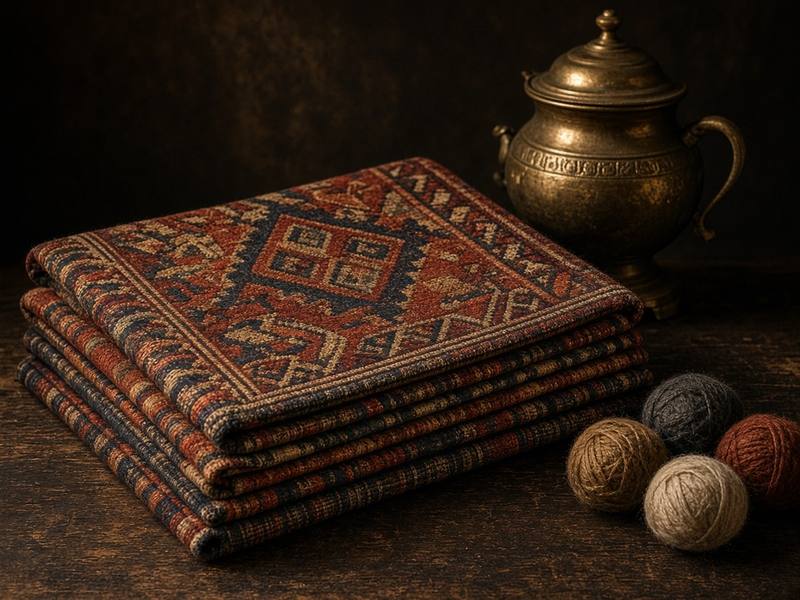
Juana Gutiérrez is the family's dye specialist, and under her the studio's natural color range has grown from roughly ten shades to fifty or sixty, worked entirely with plant and insect dyes rather than synthetic color. For red, weavers grind dried cochineal — an insect harvested from prickly pear cactus — into powder and combine it with other natural ingredients; further hues come from roughly seven additional plant sources, layered and combined to reach 60 to 70 total tones. The dyeing itself is slow and seasonal: dye plants take five to six months to mature before a four-to-five-hour collection hike, three weeks of dehydration, and nearly a week of dyeing — a single finished piece can take seven to eight months from harvest to loom.
The studio sells directly from its own site — small rugs, table runners, and bags, most under $1,000 — and takes studio visits by appointment at its Ventura address, where it also periodically runs multi-day natural-dye workshops. It brings visitors to Oaxaca as well, to learn from the family and community artisans on site. Gutiérrez's work is additionally gallery-represented and has shown in museums across the US, Europe, and Latin America.
Ruiz Bazán weaves rugs from 100% natural wool in Teotitlán del Valle, with the family handling every step from washing and carding raw wool to dyeing it with natural dyes and weaving it on foot looms. The workshop also makes purses, pillow covers and coasters to order and offers free tours by appointment.
Textiles de Lana y Algodón hand-weaves rugs, bedspreads, tablecloths and table runners in Teotitlán del Valle using natural wool and cotton dyed with natural dyes, a technique passed down through generations of craft families. The workshop, at Calle de Fiallo 3a Cerrada #13, takes custom orders and ships internationally.
 Visit official site ↗
 Visit official site ↗
 Visit official site ↗
 Visit official site ↗
 Visit official site ↗
 Visit Facebook ↗
 Visit official site ↗