Coffee Culture Coffee Roasters sets its own floor and doesn't go below it: every lot the house sells scores 80 or above on the SCA cupping scale, sourced from Colombia, Ethiopia, Costa Rica, Rwanda, Honduras, and Nicaragua, and roasted to order each week rather than held in inventory.
Best for Coffee scoring 80+ on the SCA scale from six origins
Coffee Culture Coffee Roasters sets its own floor and doesn't go below it: every lot the house sells scores 80 or above on the SCA cupping scale, sourced from Colombia, Ethiopia, Costa Rica, Rwanda, Honduras, and Nicaragua, and roasted to order each week rather than held in inventory.
The roastery also closes a loop most coffee businesses leave open — the chaff produced during roasting is composted through a partnership with sustainability group Planeta Musgo instead of going to waste.
Between the fixed cupping-score minimum, the roast-to-order schedule, and the chaff composting arrangement, Coffee Culture builds quality control and waste handling into the same operation rather than treating either as an afterthought.
La Tetería opened its first Santiago location in January 2007 as, by its own account, Chile's first specialized tea store, after two of its founding partners received a blooming tea as a gift from a friend living in France and decided to bring the format to Chile.
Best for Green, black, oolong, white, matcha and pu-erh teas
La Tetería opened its first Santiago location in January 2007 as, by its own account, Chile's first specialized tea store, after two of its founding partners received a blooming tea as a gift from a friend living in France and decided to bring the format to Chile. The shop built its catalog around green, black, oolong, white, matcha, and pu-erh tea alongside rooibos and herbal infusions, sourced from origins including Japan, China, India, and Ceylon.
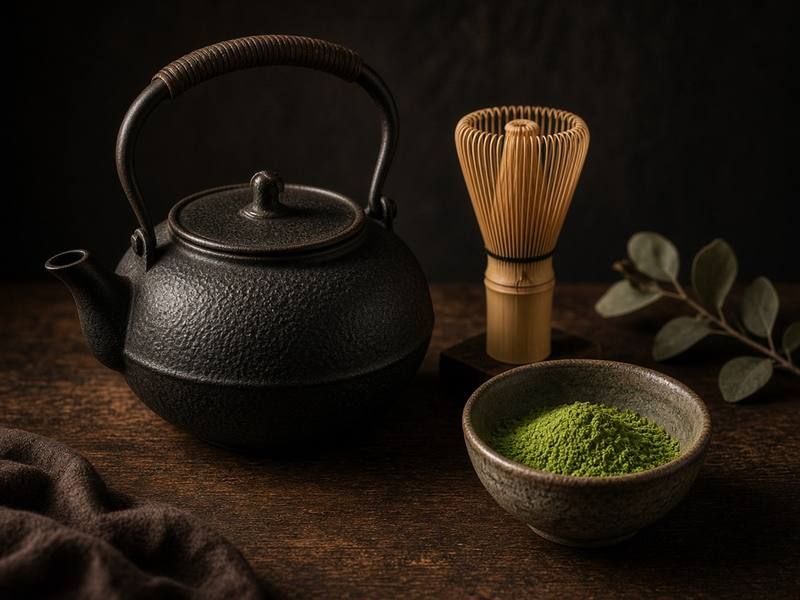
Alongside the tea itself, La Tetería sells Japanese tea ceremony accessories and runs tastings and courses aimed at teaching customers how to prepare the varieties it carries, extending the shop's role past retail into tea education.
Almost two decades after opening as the first store of its kind in the country, La Tetería's catalog — spanning six major tea categories from four countries of origin, plus formal Japanese ceremony gear — still reads as a founding claim the shop has kept building on rather than resting on.
Peregrino Coffee Roasters has been turning over weekly batches of single-origin coffee from Colombia, Brazil, and Honduras since it opened in 2016, alongside its own house blends, keeping the roasting schedule tight enough that freshness stays a constant rather than a claim on the bag.
Best for Weekly-roasted single-origin lots from Colombia, Brazil and Honduras
Peregrino Coffee Roasters has been turning over weekly batches of single-origin coffee from Colombia, Brazil, and Honduras since it opened in 2016, alongside its own house blends, keeping the roasting schedule tight enough that freshness stays a constant rather than a claim on the bag.
Beyond the beans, Peregrino sells the equipment to brew them — grinders, French presses, moka pots — through three physical stores and a wholesale arm, positioning itself as a full stop for both the coffee and the hardware around it.
That combination of weekly-roasted single origins and a genuine equipment counter, spread across three storefronts, makes Peregrino less a single specialty café and more a small regional retail chain built around coffee as a craft to practice at home as much as to drink out.
In Santiago's Barrio Italia, Singular Coffee Roasters puts its roaster where customers can watch it work, turning green coffee sourced from Colombia, Ethiopia, Honduras, Kenya, Panama, and Rwanda into finished lots in full public view.
Best for In-house V60 workshops and cupping sessions
In Santiago's Barrio Italia, Singular Coffee Roasters puts its roaster where customers can watch it work, turning green coffee sourced from Colombia, Ethiopia, Honduras, Kenya, Panama, and Rwanda into finished lots in full public view. That transparency extends into a coffee academy the roastery runs on-site, where V60 filtration workshops and cupping sessions teach the same techniques the house uses on its own beans.
It's an approach built on demystifying the process rather than treating roasting as a trade secret — anyone walking through Barrio Italia can watch a batch develop, then sign up to learn the pour-over method used to brew it.
With green coffee drawn from six different origins across two continents, Singular treats its sourcing map as broadly as its teaching mission, giving Santiago drinkers both the finished cup and the craft behind it.
Tengu Roastery treats information as part of the product: every bag carries a printed roast date, and every lot comes with the producer's name, the farm, the altitude, the varietal, and the harvest details, sourced from Colombia, Peru, and Rwanda.
Best for Weekly small-batch lots from Colombia, Peru and Rwanda
Tengu Roastery treats information as part of the product: every bag carries a printed roast date, and every lot comes with the producer's name, the farm, the altitude, the varietal, and the harvest details, sourced from Colombia, Peru, and Rwanda.
Roasting happens in small batches on a weekly cycle, which is what makes the printed date meaningful rather than decorative — a customer can see exactly how fresh the bag in hand actually is.
That level of disclosure, on every single lot rather than a flagship line, puts Tengu on the more rigorous end of specialty transparency: nothing about where the coffee came from or when it was roasted is left for the drinker to guess at.
 Visit official site ↗
 Visit official site ↗
 Visit official site ↗
 Visit official site ↗
 Visit official site ↗