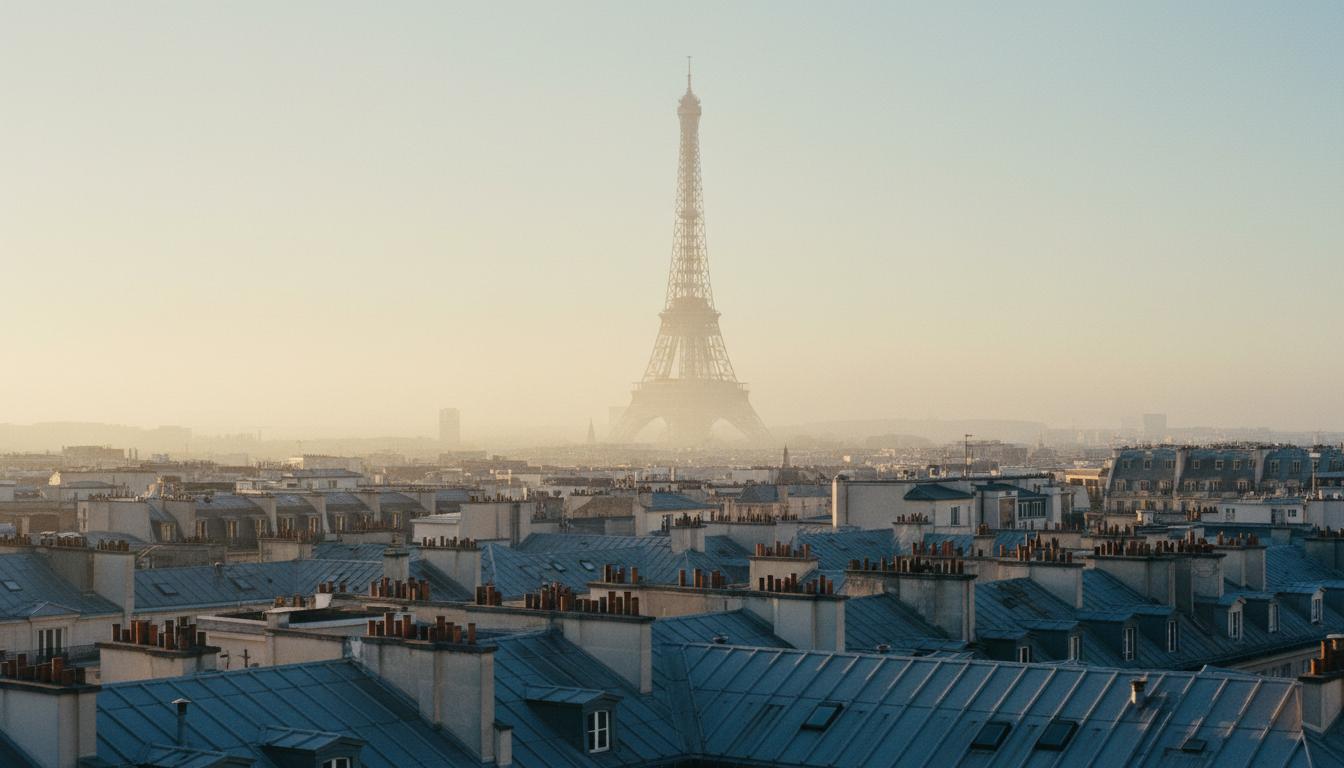
Six Doors on the Faubourg
The Rue Saint-Honoré changes its name as it crosses the Rue Royale and becomes the Faubourg, and somewhere in that change it becomes an argument: that a street can be a complete education in how things ought to be made. Walk it slowly and six doors make the case.
Start at number 24, where Hermès has kept shop since the 1880s. The house began in 1837 with harnesses; everything since — the saddle-stitched bags, the silk carrés, the refusal to hurry — descends from the logic of the stable: an object either holds or it does not. A few minutes along, at 233 Rue Saint-Honoré proper, stands Goyard, trunk-makers since before their own name went above the door, whose hand-painted chevron canvas is luxury's great inside joke — recognizable precisely because the house declines to advertise it.
The street feeds you next. La Maison du Chocolat, founded by Robert Linxe in 1977, made Paris take ganache seriously — restraint as technique, sugar held back so the cacao can speak. Mariage Frères, tea merchants with roots in the 1854 wholesale trade, turned the black canister and the colonial comptoir into French tea culture itself; the Marco Polo blend is as recognizable to the nose as any monogram is to the eye. And Pierre Hermé, the Alsatian who presented pastry in collections like couture, keeps his rose-lychee-raspberry Ispahan here — the rare dessert that became a canon.
The sixth door writes it all down. Smythson of Bond Street, the London stationer founded in 1887, keeps its Paris address on the same pavement — featherweight Nile-blue paper bound in soft leather, the diary as an object of permanence in a street devoted to it.
What unites the six is not price. It is that each house is still organized around a material discipline — leather, canvas, cacao, leaf, sugar, paper — and each treats its flagship as the place where that discipline is displayed at full strength. The Faubourg is not a mall with better tenants. It is closer to a museum district where everything is for sale and nothing is a replica.
Do it in one unhurried afternoon, in this order, ending with tea. Buy small and buy the signature: a carré, a card case, a box of plain dark ganaches, a tin of Marco Polo, one Ispahan eaten standing up, a notebook for the notes you will not take. Six doors, one street, and a complete answer to the question of why Paris still matters to people who make things.
Article references
The houses in this story
- Hermès 24 Rue du Faubourg Saint-Honoré, Paris / Worldwide / Online
Hermès' historic flagship at 24 rue du Faubourg Saint-Honoré, Paris, where Charles-Émile Hermès moved the workshops and opened a store in 1880. The house later expanded across neighboring numbers, including No. 28 in 2007; the address remains the Paris anchor for its leather goods, silk and saddlery heritage. store page → · open in the atlas → - Goyard Paris / France / Online
The most secretive Parisian trunk maker (1853) — Goyardine canvas, hand-painted chevrons, and a house policy of no advertising. store page → · open in the atlas → - La Maison du Chocolat Rue du Faubourg Saint-Honoré, Paris
Faubourg Saint-Honoré anchor: La Maison du Chocolat offers sweets, pantry goods, chocolate, tea, biscuits, condiments, or food gifts. store page → · open in the atlas → - Mariage Frères Rue du Faubourg Saint-Honoré, Paris
Faubourg Saint-Honoré anchor: Mariage Frères offers sweets, pantry goods, chocolate, tea, biscuits, condiments, or food gifts. store page → · open in the atlas → - Pierre Hermé Rue du Faubourg Saint-Honoré, Paris
Faubourg Saint-Honoré anchor: Pierre Hermé offers sweets, pantry goods, chocolate, tea, biscuits, condiments, or food gifts. store page → · open in the atlas → - Smythson Rue du Faubourg Saint-Honoré, Paris
Smythson offers leather notebooks and diaries alongside bags and travel accessories. In Paris, its store locator lists a stationery concession at Le Bon Marché on Rue de Sèvres. This is a department-store location, so visitors should check the Paris listing for the relevant collection rather than assume a standalone boutique. store page → · open in the atlas →