The Stationers
Paper was supposed to be over. The diary went into the phone, the letter into the inbox, the bookshop into the algorithm — and then, somehow, none of it stuck. The objects came back, and London, which never quite let them leave, holds two of the best rooms in the world for understanding why.
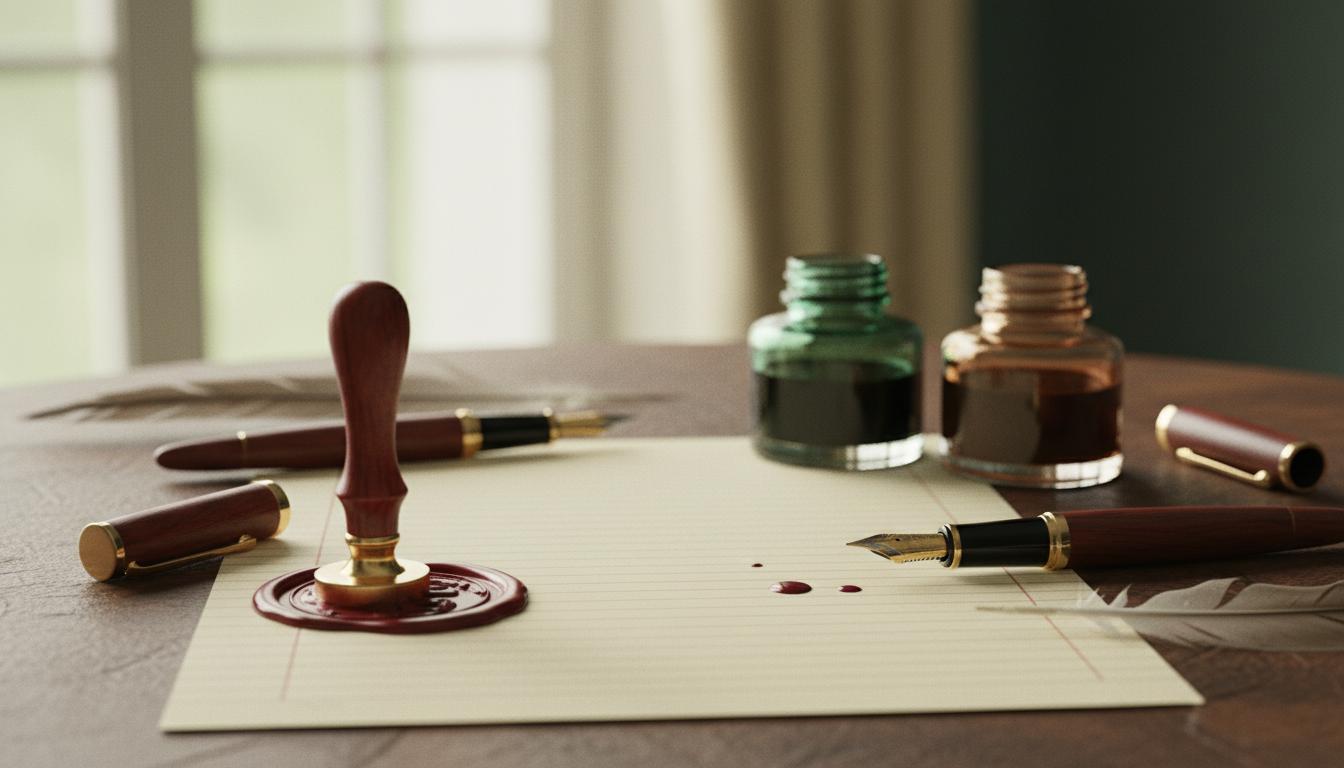
Smythson has traded on Bond Street since 1887, and its founding invention still defines it: the featherweight diary, bound in soft leather around pale blue pages light enough for a pocket. That 'Nile blue' paper — watermarked, cross-grained, unmistakable — became the signature of an entire school of English stationery, wrapped in Panama-grain lambskin and stamped in gold. Churchill carried Smythson; so did Grace Kelly; royal warrants accumulated across reigns. The modern house extends into travel wallets and leather goods, but the heart remains the correspondence counter: engraved cards, bespoke stationery, the apparatus of writing to someone as though it mattered. Have a notebook gilt-stamped with initials at purchase — personalization is what the house was built on, and the service takes minutes.
A short walk north, Daunt Books occupies an Edwardian premises in Marylebone built for bookselling: long oak galleries, a skylit stained-glass back room that may be the most beautiful bookshop space anywhere, and an organizing idea of quiet genius — books shelved by country, so that Italy's novels, histories, cookbooks, and guides stand together, and reading for a journey becomes browsing a nation. James Daunt opened it in 1990; the formula's success eventually put him in charge of Waterstones and Barnes & Noble, where the same philosophy — booksellers choosing books — was applied at scale. The canvas Daunt tote became a quiet London badge along the way.
What the two rooms share is a bet that held: that the physical form of thought — the written page, the shelved book — carries something the glowing version cannot, and that people would pay for the difference once they noticed it. Buy a notebook at one and a country at the other, and test the bet yourself.
Article references
The houses in this story
- Smythson Rue du Faubourg Saint-Honoré, Paris
Smythson offers leather notebooks and diaries alongside bags and travel accessories. In Paris, its store locator lists a stationery concession at Le Bon Marché on Rue de Sèvres. This is a department-store location, so visitors should check the Paris listing for the relevant collection rather than assume a standalone boutique. store page → · open in the atlas → - Daunt Books 83–84 Marylebone High Street, London / Online
Daunt Books' Marylebone shop is a general bookseller with a particular interest in travel and books about places. Its ranges extend from fiction to travel guides, with books arranged by country forming part of the wider offer. The business began on Marylebone High Street in 1990, before expanding into other London neighbourhoods over subsequent years. store page → · open in the atlas →